

Ask a PR agency what it costs to build authority for a D2C brand and the answer usually starts at ₹1 lakh a month and climbs from there. Read the ecommerce link building guides that rank on Google and they all say the same thing: digital PR comes first. Put those two together and most founders reach the obvious conclusion. SEO needs authority, authority needs press coverage, press coverage needs a budget they do not have yet. So organic gets parked until after the next round, and paid media keeps taking the whole acquisition budget.
We think that conclusion is wrong, and we wanted evidence rather than opinion. So we pulled the top 10 Google India results for 30 D2C category searches, from vitamin C serum to grain free dog food, and checked the backlinks behind all 249 ranking pages.
Three out of four ranking pages had fewer than 10 sites linking to them. Almost half had no linking sites at all. Marketplace listings, brand collection pages and product pages were ranking on page one with no links of their own.
Links still mattered, just not at the level most people picture. They showed up on the domain, not on the page. The brand stores that ranked were built on domains with hundreds of referring domains, and the stores in the top 3 had roughly twice the domain authority of the stores below them. So a D2C brand with no PR budget does not need a link campaign pointed at every product. It needs a credible domain, pages built for the searches it can win, and internal links that carry the authority to those pages.
This playbook covers all three. It opens with the study, method and numbers included, because every recommendation after it depends on them. Then it works through the link-free wins, the links your business already has a right to, the one asset worth building, a 90-day plan, and the metrics that tell you it is working.
The short answer
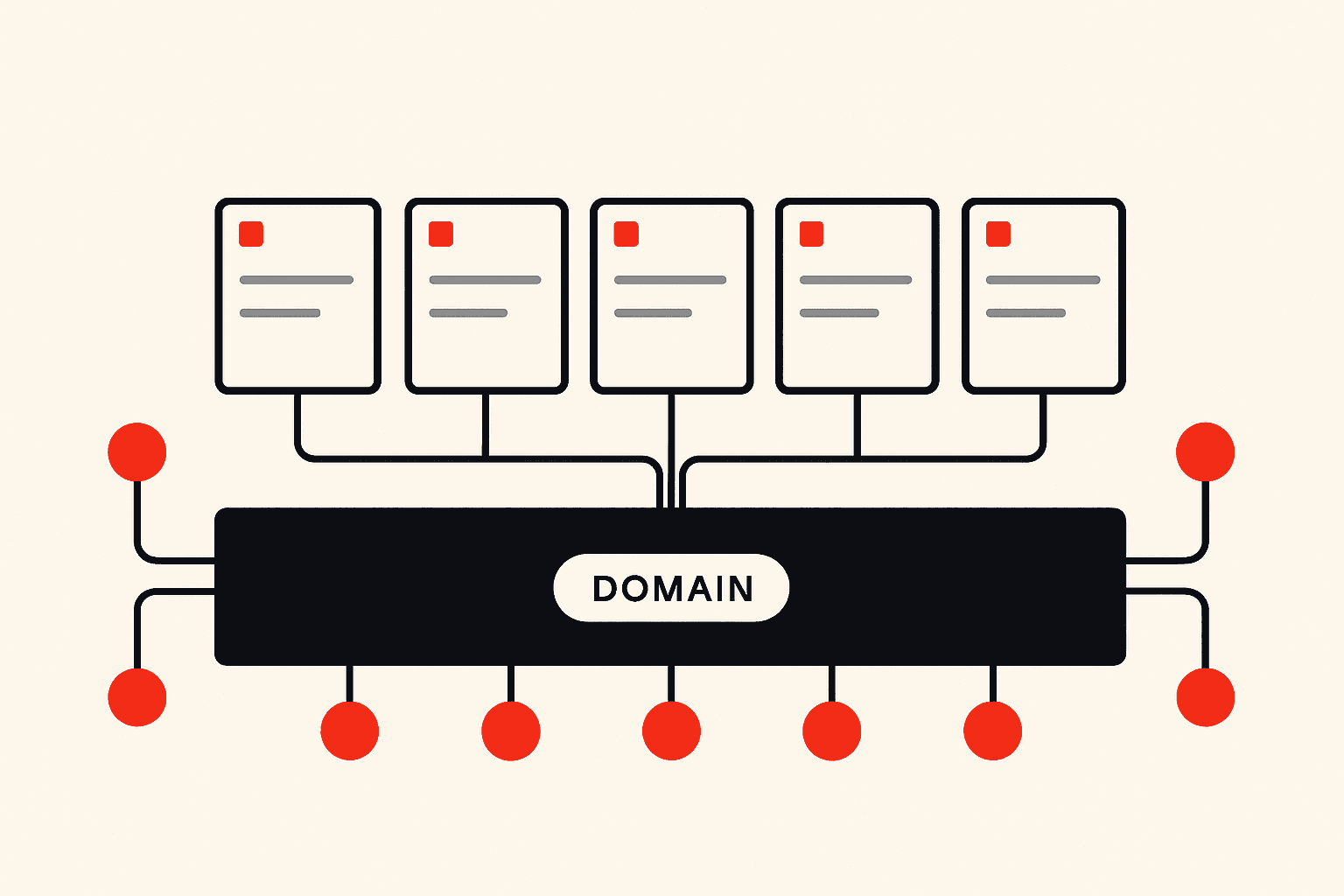
For most D2C category searches in India, the ranking page does not need its own backlinks. The domain behind it needs authority. In our study of 249 top-10 results, the median ranking page had one referring domain, while the median brand store that ranked had 591 referring domains across its whole site. A brand without a PR budget can build that authority from relationships it already has: suppliers and certifiers, stockists and B2B buyers, investors and programmes, the creators it pays, and unlinked mentions in gift guides and comparison posts. It should add one linkable asset built from its own first-party data, then use internal links to route authority to collection pages, which made up 60% of the brand store results we found. Link-free levers come first: indexable collection pages for specific needs, and Merchant Center free listings, since the popular products grid appeared on all 30 searches we captured.
What we measured: 30 Indian D2C searches, 249 ranking pages
The method is simple enough to rerun on your own category, which is the point.
Queries. We picked 15 D2C product categories where Indian brand stores compete with marketplaces: vitamin C serum, protein powder, hair oil, kurta sets, office chairs, peanut butter, water bottles, mattresses, coffee, men's deodorant, silver jewellery, baby lotion, dog food, men's face wash and sunscreen. For each we took the head term and one specific long-tail variant of the same need, such as "plant protein powder for women" or "orthopedic mattress for back pain". That gave 30 queries.
Results. For every query we captured the top 10 organic results on Google India (English, desktop) through the DataForSEO SERP API on 17 September 2026. That produced 249 organic results. Shopping grids, video carousels and AI Overviews were recorded as SERP features but not counted as organic positions.
Links. For each ranking URL we pulled the number of referring domains pointing at that exact page, and separately the number pointing at its whole domain, from the DataForSEO Backlinks index. Tracking parameters Google appends to shopping-linked URLs were stripped first so the lookup matched the canonical page. Referring domains here include nofollow links, so the page counts, if anything, overstate the ranking credit.
Classification. Each result was labelled as a brand store (a brand selling its own products, including large brands), a marketplace or multi-brand retailer (Amazon, Flipkart, Nykaa, Myntra, JioMart and similar), UGC or video (YouTube, Reddit, Quora, Instagram), or editorial and reference (publishers, health sites, encyclopaedias, government pages). Ambiguous domains were checked by hand.
The results, in one table:
| Measure | 15 head terms | 15 long-tail variants | All 30 queries |
|---|---|---|---|
| Organic results captured | 124 | 125 | 249 |
| Pages with 0 referring domains | 41.9% | 55.2% | 48.6% |
| Pages with fewer than 10 referring domains | 69.4% | 81.6% | 75.5% |
| Pages with 50 or more referring domains | 18.5% | 7.2% | 12.9% |
| Median referring domains to the ranking page | 2 | 0 | 1 |
| Share of results held by brand stores | 54.0% | 60.0% | 57.0% |
| Share held by marketplaces and retailers | 25.8% | 19.2% | 22.5% |
| Brand store results on domains with fewer than 200 referring domains | 11 of 67 | 21 of 75 | 32 of 142 |
| Of those small-domain results, how many reached the top 3 | 3 | 7 | 10 |
A few caveats before the conclusions. This is one market, one language, one day, desktop only. A backlink index is a sample of the web, not a census, so some pages will have links the index has not found. Thirty queries is enough to see a pattern and not enough to publish a ranking factor coefficient. We are not claiming links do not matter. The data says something narrower and more useful: at page level, links explain very little of who ranks for D2C category searches. At domain level, they explain a lot.
Why pages rank without links: the domain does the lifting
The marketplace numbers make the mechanism obvious. 45 of the 56 Amazon, Flipkart, Nykaa and similar URLs in our top 10s had no referring domains to the listing or search page that ranked. Nobody links to a Flipkart search results page for "vitamin c serum for skin". It ranks because Flipkart's domain carries tens of thousands of referring domains, and Google trusts pages on that domain to be what they say they are.
Brand stores work the same way at a smaller scale. The Sleep Company's page ranking first for "ergonomic chair for lower back pain" had 2 referring domains; the domain behind it had more than 1,500. Libas ranked first for "cotton kurta set for women office wear" with a page that had 1 referring domain, on a domain with over 1,200. That authority flows through the site's internal links to whichever page best matches the query.
Two patterns in the data matter for a brand without a PR budget.
Domain authority separates positions, not entry. Brand store pages in the top 3 sat on domains with a median of 749 referring domains. Brand store pages at positions 4 to 10 sat on domains with a median of 345. So authority decides who wins the top of the page, but a modest domain can still get onto page one.
The long tail lets small domains in. On head terms, only 11 of 67 brand store results came from domains with fewer than 200 referring domains. On the long-tail variants, that rose to 21 of 75, and 7 of those reached the top 3. Stores like Hermit Coffee, Sleepyhug, Codeskin and House of Diana ranked for specific needs on domains most PR agencies would call too small to compete. They matched the query more precisely than anyone else.
So the plan follows directly from the data. First, win the specific searches where a small domain can already compete. Second, grow the domain's referring domains from sources you can reach without paying for coverage. Third, move that authority to the pages you want ranking.
Want to know where your store sits on this curve? We will pull your collection pages, the queries they could win, and the referring domains of the stores ranking above you, then show you which gaps are link gaps and which are page gaps. Request a D2C SEO audit
Step 1: Win the searches that need no new links
Before you ask anyone for a link, make sure the pages that should rank actually exist, get indexed and receive the authority you already have. For most D2C stores we audit, this step alone is worth more than a quarter of outreach.
Turn specific demand into collection pages, not blog posts
Of the 142 brand store results in our study, 85 were collection or category pages, 26 were product pages, 25 were guides or blog posts and 6 were homepages. That split tells you what Google thinks a D2C category searcher wants: a shortlist first. The guides are worth noticing too. Almost all of them were brand-owned buying guides from stores such as Pilgrim, Deconstruct, Dot & Key and Zalkari, ranking for "best", "for oily skin" and "for sensitive ears" style queries where a searcher wants advice before a product list.
Most Shopify and WooCommerce stores have a few broad collections ("Skincare", "Serums") and hundreds of products tagged with the attributes buyers actually search for: skin type, concern, ingredient, size, material, occasion. The searches exist at the attribute level. The pages do not.
The fix is to build indexable collection pages for the specific needs your catalogue already serves:
- Pull the demand. Export Search Console queries containing your category words, then expand with a keyword tool. Group queries by need, not by wording: "serum for oily skin", "oily skin serum" and "non greasy serum" belong on one page.
- Set a threshold. Build a page only where you can show enough genuinely matching products, typically six or more, and where the need has meaningful search demand. Thin collections with two products get treated as thin.
- Make each page distinct. Write a unique H1 and title that name the need, add 100 to 200 words of useful buying context above or below the grid, and answer the two or three questions a buyer has at that point in their decision. Do not paste the same template paragraph with the noun swapped.
- Keep filters out of the index. Filter and sort URLs should not become thousands of crawlable near-duplicates. Promote the handful of combinations with real demand to static collection URLs and keep the rest non-indexable. Our guide to faceted navigation and crawl budget covers the rules in detail.
- Add structured data. Product schema on product pages and BreadcrumbList on collections help Google understand the hierarchy. The schema markup guide has the implementation detail.
When we worked with the leather accessories brand Leather Talks, new collection pages for folio bags, laptop sleeves, messenger bags, backpacks and briefcases were at the centre of the programme, supported by outreach to fashion and lifestyle sites, broken-link outreach and business citations rather than a press campaign. The Leather Talks case study covers the full sequence, including how a 10-day Google Shopping campaign surfaced the search terms the keyword tools missed.
Get into the product grid for free
The popular products grid appeared on all 30 of the searches we captured, and AI Overviews appeared on 18 of them. The product grid is not an organic ranking, and it takes no backlinks. Products get into it through Google Merchant Center, including unpaid free listings, based on the quality and accuracy of your product data.
For a D2C store without a PR budget, this is the fastest link-free visibility available:
- Complete the feed. Accurate GTINs, or brand plus MPN where you do not have GTINs, clean product titles that lead with the need and the product type, and every applicable attribute (size, colour, material, age group).
- Match the landing page. Price, availability and shipping on the page must match the feed. Mismatches get products disapproved.
- Fill the trust fields. Return policy, shipping cost and delivery time configured in Merchant Center, plus product ratings where you qualify.
- Use real images. Clean, high resolution images without promotional overlays.
Our Google Shopping India guide walks through Merchant Center setup and feed optimisation step by step. The same structured product data increasingly shapes how AI assistants describe and compare products, which makes a clean feed useful well beyond the Shopping tab.
Route the authority you already have
Most D2C sites already have more authority than their commercial pages receive. Links from reviews, press mentions and old campaigns land on the homepage, on blog posts or on product pages that went out of stock. The collection pages you want to rank sit two or three clicks deep with a single link from a mega menu.
Three changes fix most of it:
- Link down from your strongest pages. Find your pages with the most referring domains in any backlink tool and add contextual links from them to the relevant collections.
- Make every guide end in a collection. A buying guide about choosing a protein powder should link to the specific collection pages it recommends, using descriptive anchor text, not "shop now".
- Redirect dead products to the nearest live collection, not to the homepage, so the links they earned keep working for the category.
The internal linking playbook covers how to audit link depth and anchor distribution. And if you have not checked the basics recently, the 47-point ecommerce SEO checklist is a faster route than rediscovering them.
Step 2: Harvest the links your business already owns
Every D2C brand sits inside a network of businesses that already know it: the people who make its products, certify them, sell them offline, fund the company, and create content about it. Many of those businesses publish pages naming the brands they work with. A surprising share of those pages either do not link, link to an old URL or link to a social profile instead of the store.
These are the cheapest relevant links a D2C brand can get, because nobody needs to be persuaded. You are correcting a page that already mentions you.
Here is the inventory to work through, with an honest read on what each source is worth:
| Source | Where the page usually lives | Effort | Typical link | What it does |
|---|---|---|---|---|
| Suppliers, manufacturers, packaging vendors | "Our clients" or "brands we work with" pages | Low | Followed, sometimes a logo with no link | Relevant, category-adjacent referring domains |
| Certification and standards bodies | Certified-brand directories and databases | Low | Often a listing, sometimes linked | Trust corroboration for Google and AI assistants |
| Offline stockists, cafés, gyms, clinics | "Brands we stock" pages, local store sites | Low to medium | Followed | Local and category relevance |
| B2B and corporate gifting buyers | Vendor pages, event recap posts | Medium | Mixed | Referring domains outside your usual niche |
| Investors, incubators, accelerators, grant programmes | Portfolio pages, cohort announcements | Low | Followed, often on strong domains | High authority referring domains |
| Creators you already pay | Personal blogs, newsletter archives, YouTube | Low | Social links nofollow; owned-site links vary; paid links should be sponsored | Branded demand and entity mentions |
| Unlinked brand mentions | Gift guides, "best X in India" lists, comparisons | Medium | Followed when added | Contextual, commercial-intent links |
| Broken competitor or resource links | Niche resource pages | Medium to high | Followed | Relevant links on established pages |
Suppliers, certifiers and ingredient partners
Start with everyone on your supplier and vendor list: contract manufacturers, fabric mills, ingredient suppliers, packaging and label printers, logistics partners. Search each partner's site for your brand name. Where they list client brands, ask for a link to your store, or to a product line relevant to them, if one is missing.
Then do the same for every certification, test or standard your products carry: organic, cruelty free, textile, dermatological testing, sustainable packaging. Many certifying bodies maintain public directories of certified brands or products. A listing on the body's own domain is some of the most trustworthy corroboration a product claim can get, and it is exactly the kind of source AI assistants look for when deciding whether "cruelty free" or "organic" is true.
Stockists, B2B buyers and offline partners
D2C brands selling offline are sitting on dozens of unclaimed links. Coffee roasters supply cafés. Nutrition brands sell through gyms and clinics. Apparel and home brands sit in concept stores and multi-brand boutiques. Pet brands stock in vet clinics and grooming studios.
Build a simple "Where to buy" page listing your offline partners with links to them, then ask each to list you on their "brands we carry" page. This is the one place where a reciprocal link is completely natural: the relationship is real and both sides benefit from customers finding each other. Corporate gifting clients and event partners often publish recap posts naming the brands involved, which are worth a polite request too.
Investors, incubators and programmes
If you have raised money, joined an accelerator, won a grant or been selected for a startup programme, the organisation almost certainly has a portfolio or cohort page. Those pages often sit on strong domains and name you with a one-line description. Check that each one links to your current store domain, not to a pre-launch landing page, an old Instagram handle or a domain you have since moved away from. After a rebrand or domain migration, this list is where the most authority tends to leak.
Creators you already pay
Most D2C brands already have a creator programme, often large. Links in Instagram bios, YouTube descriptions and most social posts are nofollow, and paid links should be marked sponsored, so on their own they pass little ranking credit. Creators still help SEO in two real ways: they generate branded searches, and they generate mentions that tie your brand name to your category.
The extra step most brands skip is asking creators who also run a website, a blog, a newsletter archive or a recipe site to include a genuine review there, disclosed properly. Recipe and lifestyle creators with their own sites are especially valuable for food, kitchen and home brands, because recipe posts naturally link to ingredients and equipment. Our micro-influencer marketing guide covers structuring those programmes so the SEO upside is designed in, not left to chance.
Unlinked mentions and gift guides
Search for your brand name and main product names in quotes, excluding your own site and the marketplaces. You will find gift guides, "best X in India" roundups, comparison posts, forum threads and local listings naming you without a link. Prioritise the ones with commercial intent and real traffic. A short, specific email pointing out the mention and offering a direct product link, an updated price or a better image converts well because you are making the author's page more useful.
Set up free alerts for your brand name so new mentions reach you while the author still remembers writing them. The same process, applied to a competitor's dead links rather than your own mentions, is what we used in the broken link building case study. The zero-budget mechanics transfer directly from the SaaS link building playbook, where unlinked mentions did most of the early work.
Not sure where your store is leaking authority? We map every referring domain you already have, find the owned relationships and mentions that are not linking yet, and show you which collection pages the authority should reach. Talk to our link building team
Step 3: Build one asset that earns links on its own
Owned links raise the floor. To keep the referring domain count growing after you have worked through the list, you need one thing on your site that other people want to cite. A D2C brand has an advantage most publishers do not: first-party data from real purchases.
Build from data only you have. Anonymised and aggregated order data can answer questions journalists, bloggers and newsletter writers genuinely ask. Which cities buy the most sugar-free products? How do mattress firmness preferences change by age band? What share of first-time protein buyers are women, and how has that moved over three years? What sizes actually get returned, and why? Even simple findings, presented clearly with a methodology note, get cited because nobody else can produce them. Check your privacy policy first, aggregate heavily, and never publish anything that could identify a customer.
Or build a tool people reuse. A size and fit calculator, a daily protein intake calculator, a sunscreen SPF and reapplication guide, a mattress firmness quiz, a pet food portion calculator. The best tools answer a question that sits just before a purchase and that people search for repeatedly. Tools attract links from forums, resource pages and bloggers long after launch.
Pitch it to the right audience. You do not need national press. Pitch the asset to niche newsletters, category bloggers, subreddit moderators who maintain resource wikis, and the authors of existing guides that your data improves. Journalist request platforms such as Qwoted, Featured and Source of Sources let a founder answer specific journalist questions with that data at no cost beyond their time. One well-sourced quote in a relevant article is worth more than a dozen generic press releases.
Keep the asset current. Update the data every quarter or year and change the date on the page honestly. A stale statistic stops being cited, while a dataset that is visibly maintained keeps attracting links. For the full mechanics of turning data into coverage, see what digital PR actually involves and how digital PR replaced traditional link building. The playbook is the same without the agency retainer. You just run a smaller, more targeted version of it yourself.
Step 4: Make the authority count in AI answers too
Referring domains are no longer only a Google signal. When someone asks ChatGPT, Perplexity or Google's AI Mode for the best aluminium free deodorant in India, the answer is assembled from sources the engine trusts: editorial roundups, review platforms, community threads, retailer listings and brand pages with clear product data. Our AI visibility audit of 50 D2C brands found 38 of 50 were never named at all, and missing third-party corroboration such as reviews and press was one of the most common reasons.
The good news is that the owned-relationship work above is exactly that corroboration. Certifier directories confirm product claims. Stockist pages confirm the brand exists offline. Gift guides and comparison posts place the brand next to its category. Add two things to finish the job:
- Genuine community presence. Answer category questions in relevant Reddit and Quora communities as a clearly identified brand representative, and only where you add something useful. Our six-month Reddit experiment shows what moved AI citations and what just got downvoted.
- Review depth on third-party platforms. Marketplace and independent review volume is part of how both Google and AI assistants decide a brand is established.
The full list of what D2C brands get wrong in AI search, from keyword-only content to measuring the wrong scoreboard, is in what Indian D2C brands get wrong about SEO in the AI era. The mechanics of getting cited are covered on our answer engine optimisation page.
A 90-day plan for a store with no PR budget
This sequence assumes a Shopify or WooCommerce store with an existing catalogue, some organic traffic and one person who can give SEO a meaningful part of their week, plus occasional developer time.
| Days | Focus | Actions | Output to expect |
|---|---|---|---|
| 1 to 10 | Baseline | Export Search Console queries, list current referring domains, crawl the site for indexation and filter URL problems, note top 3 competitors' domain referring domains for your 10 priority needs | A gap list: which priority queries are page gaps and which are authority gaps |
| 11 to 30 | Link-free wins | Build or fix collection pages for 5 to 10 specific needs, clean the Merchant Center feed, add internal links from strongest pages and guides, redirect dead products to live collections | New collection URLs indexed, product grid eligibility, impressions on long-tail needs |
| 31 to 45 | Owned relationships | Contact suppliers, certifiers, stockists, investors and programmes; publish a "where to buy" page | First relevant referring domains, typically from partners who respond quickly |
| 46 to 60 | Mentions and creators | Work unlinked mentions by commercial intent, ask website-owning creators for disclosed reviews, set up brand alerts | Contextual links on commercial pages, branded search growth |
| 61 to 80 | Linkable asset | Build one data study or tool from first-party data with a methodology note | A citable page with a clear, quotable finding |
| 81 to 90 | Distribution and review | Pitch the asset to niche newsletters, bloggers and journalist request platforms; compare rankings and referring domains against the day-10 baseline | First citations of the asset, and a list of priority pages still short of authority |
Organic results rarely fit neatly into 90 days. The link-free changes usually show first. The link work mostly shows in the following quarter, as Google recrawls the linking pages and the domain's authority moves. If you want the financial model for how long organic takes to pay back against paid search, the ecommerce SEO vs PPC ROI breakdown models it month by month for an Indian D2C store.
What not to do
Most of the damage we see in D2C link profiles comes from trying to buy a shortcut.
- Do not buy link packages. Offers of a set number of "high DA" links a month for a fixed price come from sites that sell to anyone. Google's spam policies treat buying links that pass ranking credit as link spam. Even when nothing gets penalised, the links are irrelevant and usually already ignored.
- Do not pay for "write for us" guest posts on general sites. A post about protein powder on a site that also publishes casino, crypto and loan content is a signal you do not want.
- Do not over-optimise anchors. Twenty inbound links all reading "best vitamin c serum in india" do not look earned. Brand names, product names and natural phrases should dominate.
- Do not build links to pages that should not rank. Pointing outreach at a product page that will go out of stock next season wastes the link. Point it at collections, guides and the homepage.
- Do not rely on marketplaces for authority. A great Amazon or Nykaa listing builds the marketplace's domain, not yours. Marketplace presence matters for sales and for AI corroboration, but it will not rank your store.
If you have already bought links in the past, assess the profile before adding more. A focused SEO audit will separate the links worth keeping from the ones to disavow or ignore.
The metrics that tell you it is working
| Metric | Where to find it | What good looks like |
|---|---|---|
| Referring domains to the whole store | Ahrefs Webmaster Tools, Semrush, or any backlink index | Steady monthly growth from relevant sources, no sudden spikes |
| Indexed collection pages for priority needs | Search Console page indexing report | Every priority collection indexed, no filter URL bloat |
| Non-brand impressions and clicks by page type | Search Console, filtered by URL pattern | Collection pages taking a growing share of non-brand clicks |
| Priority queries on page one | Rank tracker or Search Console average position | Long-tail needs first, head terms later |
| Free listing clicks | Merchant Center performance reports | Rising clicks as feed quality improves |
| Branded search volume | Search Console brand queries | Growth that follows creator and community activity |
| AI answer presence | Manual prompt set or an AI citation tracking process | Brand named for a growing share of category prompts |
Watch the first two closely. If referring domains rise and priority collection rankings do not move, the problem is almost always routing: the authority is landing on pages that do not link on to the collections.
Tools you need, most of them free
- Google Search Console for query demand, indexation and page-type performance.
- Google Merchant Center for free listings and feed diagnostics.
- Ahrefs Webmaster Tools (free for verified sites) or any backlink tool to track referring domains and find your strongest pages.
- A crawler such as Screaming Frog to find filter URL bloat, orphan collections and internal link depth.
- Google Alerts or a similar free alert service for unlinked brand mentions.
- A spreadsheet for the owned relationship inventory. It does not need to be more complicated than partner, page URL, current link status, contact and date requested.
When a PR budget is actually worth it
This is not an argument against PR. It is an argument about sequence.
In our data, a few head terms showed what PR-scale authority looks like. For "coffee", the median ranking page had 227 referring domains and the results included Britannica and Harvard's nutrition site. For "mattress", the five brand stores in the top 10 sat on domains with a median of 770 referring domains, led by Wakefit at over 2,400. A young brand is not going to win those searches from supplier links and a calculator. At that point, sustained coverage in national publications becomes the realistic route, and a specialist digital PR programme earns its cost.
PR also makes sense around a genuine news moment: a funding round, a large retail launch, a founder with a strong point of view on a live category debate, or an original study with broad consumer interest. Our breakdown of link building costs in India lays out what each tier of that work typically costs so you can budget before you commit.
For most D2C brands earlier than that, the order that works is the one in this playbook: build the pages, route the authority you have, claim what you are already owed, ship one asset, and fund PR once you know which pages the coverage should reach. Brands that do it in reverse often get a burst of coverage that lands on the homepage and never reaches the collections that sell. Our Wakefit breakdown shows how category page depth and authority reinforced each other as the brand scaled, and our D2C growth practice and ecommerce SEO agency pages explain how we sequence the same work for clients.
Want a 90-day plan built on your own numbers? We will benchmark your store against the domains ranking for your priority needs, build the collection page and link inventory, and tell you whether PR belongs in the budget yet. Get a custom proposal
Key takeaways
- Pages rank without links; domains do not. 75.5% of the 249 pages ranking for 30 Indian D2C searches had fewer than 10 referring domains, but the median ranking brand store had 591 across its domain.
- Authority decides the top 3. Store pages in the top 3 sat on domains with a median of 749 referring domains, against 345 for positions 4 to 10.
- The long tail is open to small stores. 21 of 75 long-tail brand store results came from domains with fewer than 200 referring domains, and 7 of them reached the top 3.
- Collection pages win category searches. 85 of 142 brand store results were collection or category pages.
- The product grid needs no links. Popular products appeared on all 30 searches, fed by Merchant Center data.
- Your cheapest links are already owed to you. Suppliers, certifiers, stockists, investors, creators and unlinked mentions come before any paid outreach.
- Route the authority or waste it. Internal links from strong pages and guides to collections are what turn referring domains into category rankings.
Frequently Asked Questions
Can a D2C brand rank on Google without digital PR?
Yes, for most of the searches that actually sell products. In our study of the top 10 Google India results for 30 D2C category searches, 75.5% of ranking pages had fewer than 10 referring domains pointing at the page itself and 48.6% had none. Brand stores held 142 of the 249 organic positions. What those stores did have was a credible domain: the median brand store that ranked had 591 referring domains across the whole site. Digital PR is one way to build that domain authority. It is not the only way, and for a young D2C brand it is rarely the cheapest. Supplier and certifier listings, stockist pages, investor portfolios, the creators you already pay, unlinked mentions and one genuinely useful data asset will get most stores to a competitive domain without a retainer.
How many backlinks does an ecommerce page need to rank?
Fewer than most ecommerce SEO guides imply, at page level. The median page ranking in the top 10 across our 30 Indian D2C queries had one referring domain. For the 15 long-tail variants, the median was zero, and 55.2% of ranking pages had no referring domains at all. The number that did separate positions was domain-level authority: brand store pages in the top 3 sat on domains with a median of 749 referring domains, against 345 for store pages ranking 4 to 10. So the practical target is not links to each collection page. It is a steadily growing count of relevant referring domains to the store as a whole, plus internal links that route that authority to the collection pages you want to rank.
What is the best link building strategy for a new ecommerce store?
Start with the links your business already has a right to. Every D2C brand has suppliers, ingredient or material partners, certification bodies, packaging vendors, offline stockists, B2B buyers, investors or incubators, and creators it pays. Many of these publish a list of the brands they work with, and a large share of those lists either do not link or link to a dead page. Claiming and correcting those mentions takes days, not months, and the links are relevant by definition. After that, find unlinked brand mentions in gift guides and comparison posts, and ship one linkable asset built from your own first-party data. Buy nothing that promises a number of links.
Do collection pages or product pages rank better for D2C brands?
Collection pages, by a wide margin, for category searches. Of the 142 brand store results in our study, 85 were collection or category pages, 26 were product pages, 25 were guides or blog posts and 6 were homepages. Collection pages match how people search: a category plus a need, such as a plant protein powder for women or an aluminium free deodorant for men. A product page is a single answer to that search, while a collection page is the shortlist the searcher wanted. For D2C SEO, the highest-leverage move is usually building indexable collection pages for the specific needs your catalogue already serves, then pointing internal links at them.
Are Google Merchant Center free listings worth it for SEO?
Yes, and they need no links at all. The popular products grid appeared on every one of the 30 Indian D2C searches we captured, above or between the organic results. Products enter that grid through Google Merchant Center, including unpaid free listings, and eligibility depends on feed quality, product data, pricing accuracy and policy compliance rather than backlinks. A complete feed with accurate GTINs or brand and MPN values, high quality images, clear titles and structured return and shipping information is the fastest link-free visibility a D2C store can get. It also feeds the product data Google and AI assistants use when they recommend products.
Is buying backlinks for an ecommerce site safe?
No. Google's spam policies treat buying or selling links that pass ranking credit as link spam, and paid links should carry rel=sponsored. Beyond policy risk, bought ecommerce links are usually poor value: packages promising a fixed number of high DA links in a month are almost always sourced from sites that sell to anyone, so the links are irrelevant to your category and often devalued already. If you pay a creator or a publisher, label the link as sponsored and treat it as advertising and brand exposure, not as an SEO asset. Spend the same money on a data asset or on fixing the collection pages the authority should flow to.
Do links from influencers and YouTube help D2C SEO?
Indirectly. Links in YouTube descriptions and most social platforms are nofollow, and paid creator links should be marked sponsored, so they pass little or no ranking credit on their own. They still matter for two reasons. They create branded search demand, which is one of the clearest signals that a brand is real, and they create mentions that AI assistants and Google can associate with your brand entity and your category. The SEO value appears when a creator also runs a blog or a newsletter archive and writes a genuine review, or when their coverage leads other sites to mention you. Ask your existing creators for a link from any owned website they publish on, not only a description link.
How long does ecommerce link building take to show results?
Link-free fixes move first. Indexable collection pages, internal linking and Merchant Center listings can show impressions within two to six weeks of being crawled. Links from owned relationships, such as supplier, stockist and investor pages, usually land within the first 30 to 60 days because the other side already knows you. Their effect on rankings typically becomes visible over two to four months as the domain's referring domain count rises and Google recrawls the pages. A linkable data asset is the slowest and the most durable: expect the first citations in the month after launch and continuing links for a year or more if the data stays current.
When is a digital PR budget actually worth it for a D2C brand?
When the searches you need are head terms dominated by domains with thousands of referring domains, and your owned relationships are exhausted. In our data, coffee was the clearest example: the median ranking page had 227 referring domains and the results included Britannica and Harvard. A brand competing there needs national coverage that only sustained PR tends to earn. PR also makes sense around a genuine news event such as a funding round, a retail launch or an original study with broad consumer interest. For most D2C brands below that stage, the better sequence is to exhaust link-free wins and owned links first, then fund PR once you know which pages the authority should reach.

Aditya Kathotia
Founder & CEO
CEO of Nico Digital and founder of Digital Polo, Aditya Kathotia is a trailblazer in digital marketing. He's powered 500+ brands through transformative strategies, enabling clients worldwide to grow revenue exponentially. Aditya's work has been featured on Entrepreneur, Economic Times, Hubspot, Business.com, Clutch, and more. Join Aditya Kathotia's orbit on LinkedIn to gain exclusive access to his treasure trove of niche-specific marketing secrets and insights.