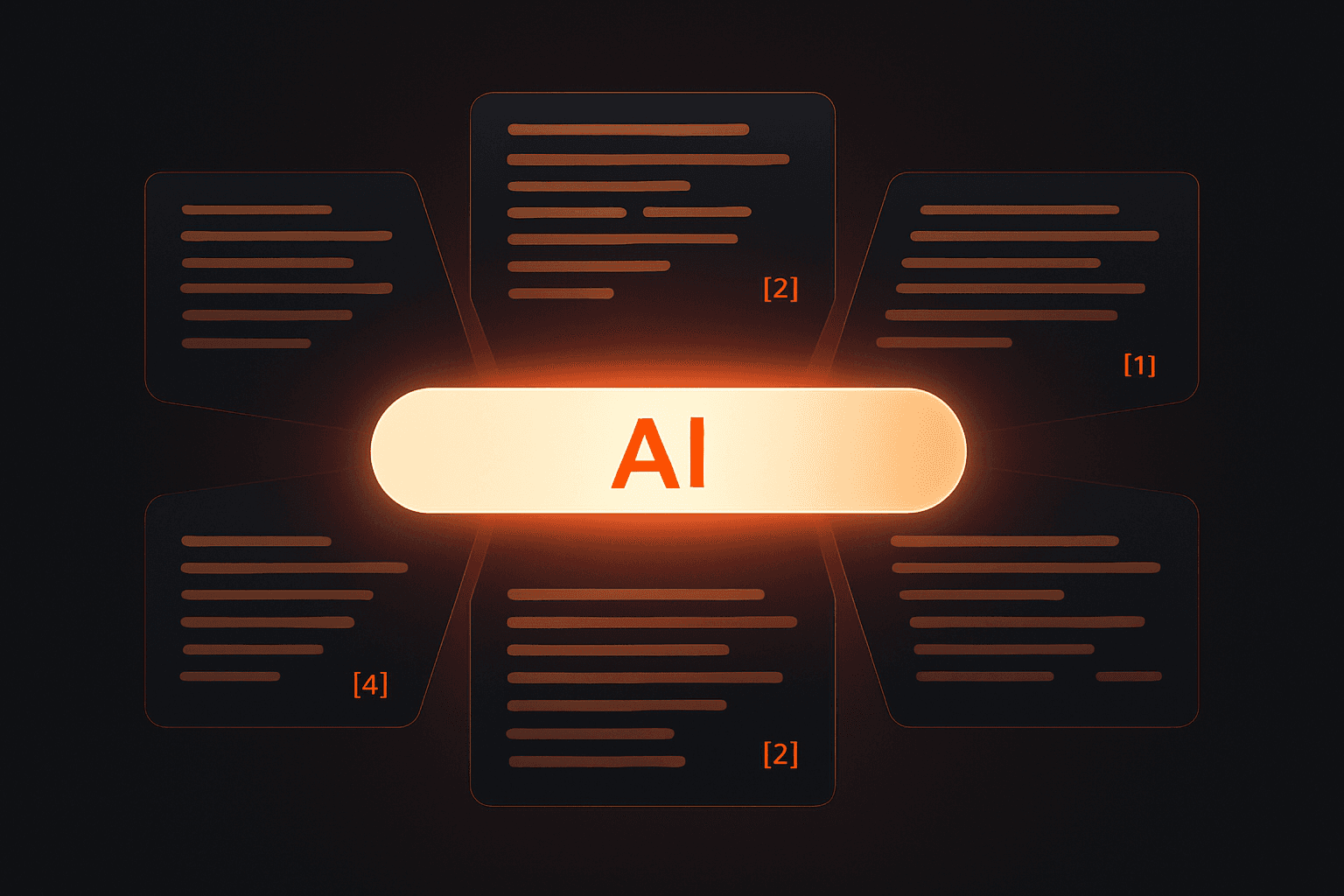
We engineer brand visibility across Google AI Overviews, ChatGPT, Perplexity, Gemini, Claude and Bing Copilot - so when buyers ask an AI for a recommendation in your category, the answer is your brand. Built for D2C, B2B SaaS, Fintech and enterprise.
Response within 1 business day · No sales pitch · Strategy-first

The Discipline
Answer Engine Optimization (AEO) is the practice of structuring a brand and its content so that AI-driven answer engines cite it - directly, by name, in the responses they generate. Where classic SEO targets a ten-blue-links page, AEO targets a single synthesised answer assembled by a large language model. Generative Engine Optimization (GEO) is the LLM-specific subset of AEO, focused on ChatGPT, Perplexity, Gemini, Claude and Bing Copilot.
The shift is structural. More than 60% of Google searches now end without a click. Google AI Overviews serve over 13 billion responses monthly. ChatGPT processes hundreds of millions of conversational queries every week. The brands cited in those answers are the brands buyers see. Everyone else is invisible - regardless of where they rank in classic search.
AEO is not a replacement for SEO. It is the next layer of it. The same authority, content quality, entity strength and link equity that drive organic ranking feed AI Overviews and LLM training. The deliverable changes; the underlying engineering deepens.

The umbrella discipline. Optimises for every system that returns answers - featured snippets, People Also Ask, AI Overviews, voice assistants, knowledge panels.
The LLM-specific subset. Optimises for ChatGPT, Perplexity, Gemini, Claude and Bing Copilot - systems that synthesise free-form answers from retrieval and training data.
The combined practice. AEO plus GEO, executed alongside the on-page, technical and off-site SEO foundations every modern search programme depends on.
Why Now
Four forces are dismantling the classic SEO playbook in parallel. Brands that adapt now compound. Brands that wait spend the next three years rebuilding visibility they could have defended with one quarter of focused AEO work.
Over 60% of Google searches end without a click. AI Overviews, featured snippets, knowledge panels and Discussions blocks absorb the intent before the user ever scrolls to a blue link. Optimising for ranking alone leaks share to whoever is cited inside the SERP itself.
Buyers research products by talking to LLMs the way they used to talk to colleagues. ChatGPT, Perplexity and Gemini are now front-of-funnel for category research, vendor shortlisting and product comparisons. The classic keyword stem - two or three words typed into a box - is being replaced by long-form conversational queries.
Google and every major LLM no longer think in keywords - they think in entities. A brand that exists as a defined node in the knowledge graph is retrievable; a brand that does not, is invisible. Entity SEO is no longer optional.
AI Overviews and LLMs aggressively prefer high-trust sources. Editorial mentions, Reddit threads, Wikipedia-tier references, podcast transcripts and structured directories now matter as much as backlinks. The off-site footprint determines whether you are cited.
AEO sits inside our broader AI SEO programme and pairs naturally with digital PR and Reddit SEO.
SEO vs AEO vs GEO
The clearest way to understand the discipline is to put the three side by side. They share signals, but they do not share deliverables.
We do not sell AEO and GEO as standalone services because they are not standalone problems. They sit inside an integrated SEO programme where the same authority work feeds every surface.
The Framework
Every retainer runs through the same eight-pillar programme. We move horizontally - resolving the weakest pillar first, then compounding upward. There are no shortcuts; brands that skip pillars fail in ways that look like results until they do not.

Crawlability for AI bots, llms.txt, IndexNow, freshness signals, core web vitals, sitemap hygiene and canonical discipline. Without this layer, every other tactic leaks.
Nested schema across Organization, Article, FAQPage, Product, Review, HowTo, BreadcrumbList and SpeakableSpecification - implemented as a graph, not isolated blocks.
Wikidata definition, Google Knowledge Graph entry, sameAs networks across LinkedIn, Crunchbase, industry directories and verified social profiles. Your brand becomes a defined node.
Topic clusters built around entity-rich pillar pages, conversational long-tail clusters and question-answer passages engineered for direct retrieval by LLMs and AI Overviews.
Distributed brand mentions across high-trust third-party domains - editorial publishers, niche directories, review sites, Reddit, Hacker News, podcasts and YouTube transcripts.
Coverage in tier-1 and tier-2 publishers that LLMs treat as ground truth. Editorial mentions are still the highest-leverage authority signal in both classic SEO and GEO.
Reddit, Quora, Stack Exchange, GitHub Discussions and niche communities - the discussion layer LLMs and AI Overviews lean on for peer-validated brand recommendations.
Monthly prompt audits across ChatGPT, Gemini, Claude and Perplexity. Share-of-voice tracking, citation attribution, and the closed-loop measurement that lets you optimise to the answer engine, not just the SERP.
What We Do
Eight disciplines, one outcome: your brand becomes the default answer in your category - across Google AI Overviews, ChatGPT, Perplexity, Gemini, Claude and Bing Copilot.
We define your brand as an unambiguous entity across Wikidata, Google Knowledge Graph, schema sameAs networks, and authoritative directories - the foundation every LLM and answer engine retrieves from.
We restructure existing pages and design new ones around question-answer passages, definitional summaries and decision-tree scaffolding - the formats AI Overviews and LLMs extract first.
Nested schema graphs - Organization, Article, FAQPage, Product, Review, HowTo, SpeakableSpecification - implemented through code, not plugins. Validated against live AIO and SERP behaviour.
Editorial pickups, Reddit and forum mentions, podcast guesting, YouTube transcripts, niche directory placements - the distributed footprint that trains LLMs to cite you.
Controlled prompt audits across ChatGPT, Gemini, Claude and Perplexity. We benchmark category share-of-voice and report movement monthly against a fixed keyword universe.
Targeted optimisation of pages that already rank in the top 10 to convert them into AIO citations and PAA captures - the fastest visibility wins available in 2026.
Long-tail, conversational, scenario-driven content built specifically for the natural-language queries that drive LLM and voice usage - not the keyword stems classic SEO chases.
Crawlability for AI bots (GPTBot, ClaudeBot, PerplexityBot, Google-Extended), llms.txt configuration, content freshness signals, and core web vitals - the table-stakes the rest of AEO depends on.
Platforms
Each AI search system has its own retrieval logic, its own training-data preferences and its own citation behaviour. A single playbook fails. We run six parallel sub-programmes, one per platform, all sharing the same underlying authority engine.
The largest AEO surface. Citations weight toward top-10 organic ranking, schema-clean content, and FAQPage / HowTo passages.
Cites a smaller, more authoritative source set than Google. Heavily training-influenced - long-running brand mentions matter.
The most retrieval-driven LLM - cites at runtime from live web search. Quickest to reflect new authority work.
Shares Google's index but with its own retrieval and synthesis layer. Powers AI Overviews and Google Assistant.
Long-context model widely used in research, technical and B2B SaaS workflows. Cites high-trust documentation and editorial sources.
Bing index plus GPT-4-class generation. Bing's lower SEO competition makes it the most underrated AEO target.
Industries We Serve
Different categories carry different AEO unit economics. The signals that win in B2B SaaS will not win in healthcare. We tune the programme to the buyer behaviour your category actually shows.
Our Process
A repeatable five-stage programme tuned to the cadence AI engines actually retrain at. Every stage has a defined deliverable, a measurable outcome, and feeds the next.

We map your current presence across Google AI Overviews, ChatGPT, Gemini, Claude, Perplexity and Bing Copilot using a controlled prompt set tuned to your category. We measure citation share, surface coverage and competitor footprint - the baseline every later decision is anchored to.
Deliverable: AI visibility baseline + competitor teardown
Wikidata definition, Knowledge Graph candidacy, schema graph implementation across Organization, Article, FAQPage and Product, llms.txt, IndexNow, AI-bot crawlability. The infrastructure layer every later tactic compounds on.
Deliverable: production-grade AEO foundations
We restructure existing high-authority pages around question-answer passages, definitional summaries and decision-tree scaffolding. New conversational pillars are designed for the long-tail queries LLM users actually ask.
Deliverable: rolling AEO content backlog
Editorial pickups, Reddit and Quora presence, podcast guesting, YouTube transcripts, niche directory placements and structured third-party reviews. The distributed footprint that trains LLMs to associate your brand with the category.
Deliverable: monthly off-site citation ledger
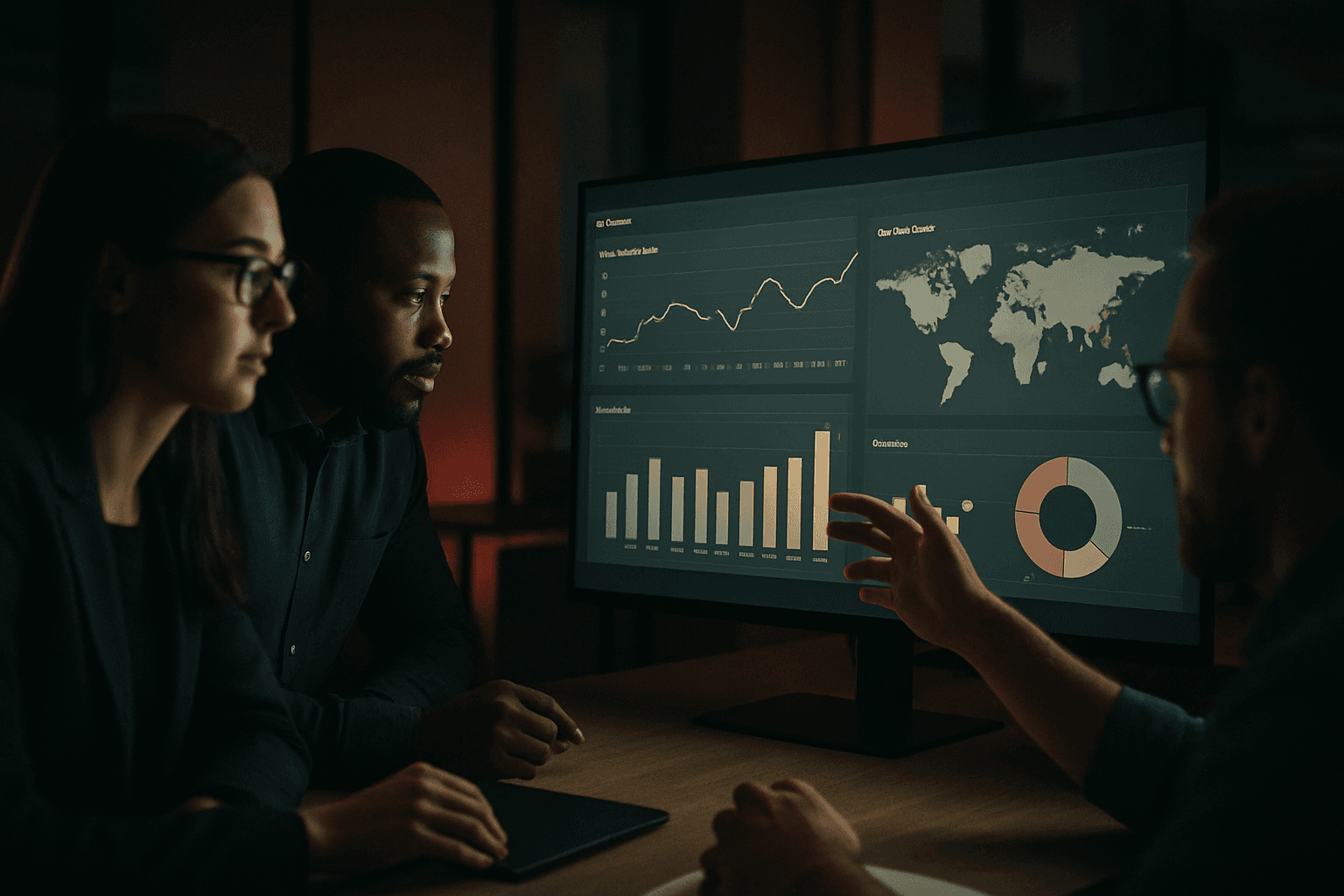
Monthly prompt audits across four major LLMs, AI Overview presence tracking, snippet capture log, GSC branded-search lift, GA4 AI-source attribution. Closed-loop measurement that lets us optimise to the answer engine, not just the SERP.
Deliverable: monthly LLM share-of-voice dashboard
Search Behaviour, 2026
The case for AEO is not aesthetic. It is in the search behaviour, the publisher data and the keyword universe.
60%+
of Google searches end without a click. Zero-click is the default, not the exception.
13B+
Google AI Overviews served monthly across markets. The largest single AEO surface live.
300M
weekly active ChatGPT users - the second-largest answer surface, growing fastest.
1,900
monthly searches for 'answer engine optimization' globally - and rising every quarter.
2,900
monthly searches for 'geo vs seo'. Decision-makers are actively redefining the discipline.
$17–34
per-click CPC range on commercial AEO and GEO keywords - high-intent commercial demand.
Sources: Similarweb, Semrush, DataForSEO Google Ads search-volume API (US, en), public statements from Google and OpenAI. Figures reflect the most recent reporting period available at time of writing.
Typical Outcomes
Anonymised outcomes from active retainers. Specific case studies available under NDA - request below.
“We came in worried about losing organic clicks. Within a quarter we were the brand cited inside the AI Overview - and our SQL volume was up materially because every prospect arrived already pre-qualified.”
“ChatGPT now names us inside the top three brands when shoppers ask the category question. That single shift is worth more than every paid acquisition channel we run.”
Engagement Models
Transparent monthly pricing in USD and INR. No long-term contracts. Indicative pricing - final scope confirmed during audit.
Foundation
$1,499/ month
₹1,24,000
For brands establishing AEO baseline visibility and capturing the fastest wins.
Growth
$2,999/ month
₹2,48,000
For scaling brands competing for category share-of-voice across AI search.
Authority
Custom
Bespoke scope
For category leaders defending share-of-voice across markets, languages and platforms.
All tiers include LLM citation tracking · No long-term contract · 30-day satisfaction guarantee

Why Nico Digital
AEO is not a single channel - it is the integration of every channel that produces an authority signal. We are built for that integration. Our delivery model combines senior strategy, in-house engineering, and an integrated SEO + AEO + digital PR + Reddit footprint inside a single retainer.
The off-site authority AEO requires - editorial mentions, Reddit footprint, podcast pickups, knowledge-graph entries - is produced inside the same retainer rather than coordinated across vendors.
We have run organic, AEO and AI search programmes for D2C, B2B SaaS, BFSI, healthcare and ecommerce brands across India, US, UK, EU and APAC.
Strategy and engineering are senior-led. Delivery operates from India. The structural cost advantage funds deeper content, more outreach and more measurement than US peers can run on the same budget.
Schema graphs, llms.txt, IndexNow, AI-bot crawlability and entity engineering implemented in code, not plugins. Validated against live AIO and LLM behaviour each cycle.
AEO works best alongside our broader SEO services, digital PR, link building and Reddit SEO programmes. Each compounds the others.
FAQ
Answer Engine Optimization is the practice of structuring a brand, its content and its public footprint so that AI-driven answer engines - Google AI Overviews, ChatGPT, Perplexity, Gemini, Claude, Bing Copilot - cite it in generated answers. Where classic SEO optimises for ten blue links, AEO optimises for a single synthesised response. The work spans entity definition, schema markup, citation engineering, knowledge-graph alignment, semantic content design and authoritative third-party mentions. AEO has rapidly become the most valuable layer of an SEO program because more than 60% of Google searches now end without a click and AI answer engines are absorbing that intent at scale.
Generative Engine Optimization is the discipline of optimising specifically for generative AI surfaces - the LLM-driven systems that produce free-form answers rather than retrieve documents. AEO is the broader umbrella covering every system that returns answers (featured snippets, knowledge panels, AI Overviews, voice). GEO is the LLM subset of AEO. In practice the two are inseparable: the same entity-rich content, structured data, citation footprint and authority signals that win an AI Overview slot also influence how ChatGPT, Claude, Gemini and Perplexity describe a brand. We treat AEO and GEO as one integrated programme.
Traditional SEO targets the ten-blue-links page and is measured in keyword rankings and clicks. AEO targets answer surfaces - featured snippets, People Also Ask, Google AI Overviews, voice results - and is measured in citations, mentions and visibility share. GEO is the AI-specific subset of AEO and is measured in LLM citation share across ChatGPT, Gemini, Claude and Perplexity. The same underlying assets feed all three, but the optimisation tactics diverge: SEO rewards backlinks and rankings, AEO rewards passage clarity and schema, GEO rewards entity authority and distributed third-party validation across the open web. A serious 2026 SEO programme runs all three layers in parallel.
Google AI Overviews use a retrieval-augmented generation pipeline. The system runs the query through Google search, retrieves a candidate set of pages biased toward high-quality, well-structured sources, and feeds passages into Gemini to compose an answer. Citations go to the sources whose passages most directly answered the sub-questions inside the query. In practice the cited sources tend to share four traits: they rank organically in the top 10 for the underlying query, their content is structured with clear question-answer scaffolding, they expose unambiguous entity signals through schema markup, and they have multiple corroborating mentions across high-trust third-party domains. AEO optimises every one of those traits.
LLMs cite brands for two reasons: they were trained on text that mentioned the brand authoritatively, and at runtime their retrieval layer pulled in pages that mentioned the brand in the context of the query. To win both layers we engineer (1) entity authority - so the brand is a known node in the model's training data and the open knowledge graph; (2) distributed citation footprint - mentions across Reddit, GitHub, Wikipedia-eligible sources, industry directories, niche publishers, podcast transcripts and YouTube; (3) clean, schema-marked content on the brand's own site so retrieval pipelines extract the right passages; (4) freshness signals so the model treats the brand as currently relevant. Most of the work happens off-domain. Brands that only optimise their website rarely win in LLMs.
Faster than classic SEO. Featured-snippet captures and AI Overview citations often land within 30 to 60 days because the on-page changes - schema, passage structure, internal linking, entity definition - are interpreted quickly by retrieval systems. LLM citation share moves more slowly because models retrain on a delay; meaningful share-of-voice gains in ChatGPT and Gemini typically take 90 to 180 days and require sustained off-site authority work. Most clients see early wins (snippet captures, Perplexity citations, AI Overview mentions on long-tail queries) inside the first quarter and compounding gains from month four onward.
No - it is reshaping what SEO means. Organic clicks on classic blue links are declining for informational queries, but the underlying ranking signals (authority, content quality, link equity, entity strength) feed AI Overviews and LLMs even more directly than they fed the old SERP. The brands that win AEO are almost always brands that also rank well organically. The shift is in the deliverable, not the discipline. Treat AEO as the next layer of SEO, not a replacement.
It depends on the query. Pure-information queries (definitions, how-to fragments, basic facts) lose clicks because the AI Overview answers them in the SERP. Commercial, comparative and decision-stage queries see the opposite effect: an AI Overview citation drives more qualified clicks than a position-three blue link because the user has already pre-qualified the brand inside the answer. The strategic move is to deprioritise content that only serves zero-click informational intent and double down on content that monetises the moment a user does click - product comparisons, pricing pages, decision frameworks, in-depth reviews.
Search engines no longer think in keywords - they think in entities. An entity is a uniquely identified concept (a brand, a person, a product, a place) tracked in a knowledge graph. AEO success requires that your brand exists as a clear entity: a stable name, consistent description, structured profile across schema markup, Wikidata and authoritative directories, and topical association with the categories you serve. When an LLM is asked about your category, it pulls the entities it has high-confidence definitions for. If you are not a defined entity, you are functionally invisible. Entity engineering is one of the highest-leverage AEO tactics in 2026.
Both. Most retainer programmes start with an AEO retrofit of existing high-authority pages - adding FAQ blocks, restructuring passages into question-answer pairs, layering Article and FAQPage schema, fixing entity definitions, adding direct, quotable summary paragraphs at the top of each section. Retrofits typically lift AI Overview eligibility within 60 days. New content is then built specifically for high-volume AEO opportunities - definitional pages, comparison pages, decision-tree explainers and scenario-based long-tail pages that answer the conversational queries LLM users actually ask.
We report on five layers each month. (1) AI Overview presence: count of queries where you appear, share of voice vs competitors. (2) LLM citation share: how often ChatGPT, Gemini, Claude and Perplexity name your brand in category-defining queries, tracked through controlled prompt sets. (3) Featured snippet and PAA captures from classic SERPs. (4) Branded search lift in Google Search Console - the leading indicator of AI-driven mind share. (5) Attributable conversions from AI-source traffic, segmented in GA4 by referrer and landing page. You see exactly which assets are earning citations and which need to be rewritten.
Yes - arguably more than for B2B. ChatGPT and Perplexity are now used for product research at meaningful scale, and Google AI Overviews on category queries (best running shoes, best AG1 alternative) frequently surface a small set of cited brands. If your brand is not in that cited set, you are excluded from a fast-growing zero-click discovery channel. We engineer category visibility through structured product schema, comparison content, third-party review syndication, Reddit and forum mentions, and authority signals that train LLMs to associate your brand with the category.
B2B SaaS buyers are disproportionate users of LLMs. Decision committees ask ChatGPT, Claude or Perplexity for category overviews and shortlists before they ever see a sales rep. Our SaaS AEO programmes prioritise (1) category-definition content owned on the brand's domain, (2) review-site syndication to G2, Capterra, TrustRadius and verticalised directories that LLMs treat as primary sources, (3) Reddit and Hacker News presence in relevant communities, (4) podcast and YouTube transcript optimisation so the brand surfaces in voice and video retrieval, (5) entity engineering against Wikidata and the Google Knowledge Graph. The objective is simple: when an enterprise buyer asks an LLM “what are the leading vendors in X”, the brand is in the answer.
FAQPage and Article schema win the most snippet captures. Beyond those, Organization schema with sameAs links to Wikidata, LinkedIn and authoritative profiles is essential for entity definition. Product, Review and AggregateRating schema unlock AI Overview eligibility on commercial queries. HowTo, BreadcrumbList and VideoObject support specific surface formats. SpeakableSpecification helps with voice and assistant queries. We also implement nested schema graphs so the relationships between Organization, Person (executives, authors), Product and Service are explicit - retrieval pipelines parse the graph and use it to attribute answers.
Partially. GSC currently shows impressions and clicks from AI Overview surfaces inside the standard performance report - they are aggregated rather than broken out, which means you can see directional movement but not query-level AIO presence directly from Google. To get clean AIO tracking we layer a third-party rank tracker that monitors AI Overview presence across a controlled keyword list, and we run scheduled prompt audits against the major LLMs to track citation share. The combination gives you a defensible measurement framework even before Google ships full AIO reporting.
We retainer AEO work in three tiers - Foundation, Growth and Authority - starting at $1,499 / month and scaling to bespoke enterprise scope. Pricing is driven by the breadth of keyword universe, the number of LLM platforms tracked, and the depth of off-site authority work (Reddit, digital PR, citation engineering, knowledge graph). Most brands see meaningful results within 90 days on the Growth tier; enterprise programmes generally start on Authority because the volume of entities, languages and surfaces they need to defend cannot be done at lower scope. All tiers include monthly LLM citation tracking on at least three platforms.
Yes. AI Overviews and LLM behaviour vary materially by language and region - the Hindi, Spanish, French, German and Arabic AIO surfaces have their own citation patterns, and ChatGPT's multilingual behaviour favours different sources than its English behaviour. We run multilingual AEO programmes against region-specific knowledge graphs, language-localised entity profiles and country-tuned citation footprints. Most of our enterprise clients run in at least three languages.
Three reasons. (1) We are an integrated SEO + AEO + digital PR + Reddit + content agency, so the off-site authority signals AEO requires - editorial mentions, Reddit footprint, podcast pickups, knowledge-graph entries - are produced inside the same retainer rather than coordinated across vendors. (2) We have run organic search and AI search programmes for 175+ clients across India, US, UK, EU and APAC, including D2C, B2B SaaS, BFSI and enterprise. (3) Our delivery cost is structurally lower than US peers because our senior strategy and engineering operate from India, while content and outreach happen in the markets that matter. AEO is high-leverage work; we run it like a serious engineering programme.
We will benchmark your brand across Google AI Overviews, ChatGPT, Gemini, Claude, Perplexity and Bing Copilot - and show you which competitors are already cited where you are not.
No spam · No pressure · Honest assessment · Response within 1 business day