

Instagram has over 1.3 billion monthly users, and most brands are generating noise for a fraction of them while converting almost none. The problem is not the platform. It is the absence of a commercial logic connecting content decisions to business outcomes.
The brands that generate consistent revenue from Instagram are not the ones posting most frequently or with the most polished creative. They are the ones who:
- have matched their content strategy to a specific funnel architecture,
- understand exactly what behavior they are trying to drive with each content type, and
- measure outcomes beyond vanity metrics like follower count and impression share.
Start with Business Goals, Not Content Calendars
The most common mistake in Instagram strategy is starting with the content question, specifically what to post, before answering the business question of what Instagram is supposed to accomplish.
Instagram can serve several legitimate business functions:
- direct product discovery and purchase,
- brand awareness for an audience not yet in the purchase funnel,
- community building that increases retention and LTV,
- customer service through DMs, and
- influencer-driven acquisition.
These are not the same objective, and they require different content approaches, different success metrics, and different resource allocations.
Before building any content system, define the primary business function Instagram plays in your overall marketing architecture.
A D2C apparel brand using Instagram primarily for new customer acquisition through shoppable posts operates differently from a SaaS company using Instagram to build thought leadership among a professional audience. Neither is wrong, but conflating the two produces a content strategy that serves neither objective well.
The secondary objectives matter too, but they should be sequenced. What produces mediocre performance across all dimensions, rather than meaningful progress on the most commercially important one, includes attempting to simultaneously build brand awareness, drive direct purchase, generate UGC, and grow a community with limited content and budget.
Account Setup and Optimization: Built to Convert
Your Instagram profile is a landing page that most marketers treat as a business card. The distinction matters because every follower, every ad click, and every organic visitor who lands on your profile is making a split-second evaluation about whether to engage further. Weak profiles lose that evaluation consistently.
Switching to a Business or Creator account is the baseline requirement for any brand using Instagram commercially.
Beyond unlocking the Insights analytics suite, a Business account enables you to add contact buttons, categorize your business, run ads, and access shopping features. There is no meaningful downside to switching unless you have privacy concerns about showing your business category.
Bio optimization is underinvested relative to its impact. You have 150 characters to answer three questions that a new visitor asks implicitly:
- what do you do,
- who is it for, and
- why should I follow or visit your website?
Most brand bios answer the first question vaguely, ignore the second, and use the third for a generic CTA. A bio that states specifically what you do, for whom, and what the visitor gets by following or clicking your link consistently outperforms generic descriptions.
Your link-in-bio is the only direct bridge from Instagram to your website. If you run multiple campaigns or offer different products, a link management page - using tools like Linktree, Beacons, or a custom setup - works better than sending users to your homepage. Always track these clicks with UTM parameters to measure how much traffic and revenue Instagram is actually driving.
Story Highlights act as a permanent navigation bar on your Instagram profile. Organize them around high-value content - products, customer reviews, how it works, and FAQs. This keeps your best Stories visible long after the 24-hour limit and creates a clear path for new visitors to understand what you offer.
Content Strategy: Matching Format to Function

Instagram offers multiple content formats, and each has a different distribution mechanism, a different audience behavior pattern, and a different commercial use case. Using all of them equally is not a strategy. Prioritizing based on your objectives and capabilities produces better outcomes with fewer resources.
Feed Posts remain the most permanent and SEO-adjacent format. They index in Instagram's search and are the content visitors see when evaluating your profile. For brands where product discovery is a primary objective, high-quality product imagery and shoppable posts belong primarily in the feed. Consistent graphic design for social - covering templates, color systems, and typography - allows brands to produce high-quality feed content at scale without rebuilding the visual identity for every post.
Instagram Stories are the highest-frequency, lowest-production-expectation format. Stories reward authenticity and immediacy, and they are best suited for behind-the-scenes content, real-time updates, interactive polls, and direct audience engagement. The interaction features available in Stories - polls, question stickers, sliders, and quizzes - are genuinely useful for audience research. Most brands use these features for engagement purposes alone and miss their research value entirely.
Reels receive the most favorable distribution treatment from Instagram's algorithm among all content formats, as Meta continues pushing Reels to compete with Instagram Reels, YouTube Shorts, Moj, and Josh in the short-form video space. This means Reels offer the highest potential reach for accounts trying to grow beyond their existing follower base. For brands that have not yet invested in Reels, the entry point worth considering is educational or informative content in your product or service category.
Instagram Live is underutilized by most brands relative to its engagement potential. Live sessions generate real-time notifications to your followers, create an immediacy that no other format replicates, and allow for genuine two-way interaction. Product launches, Q&A sessions with founders or experts, and partnership events with other brands or influencers are the Live formats that consistently produce strong engagement.
The Algorithm, Honestly Explained
Understanding Instagram's distribution logic helps explain why some content strategies produce compounding results and others plateau regardless of posting frequency.
The algorithm evaluates content on two primary dimensions:
- relevance to a specific user based on their historical behavior, and
- quality signals from early engagement after posting.
The implication is that posting content your existing audience ignores trains the algorithm to limit your reach, regardless of how frequently you post. Quality and audience alignment consistently outperform posting volume.
For new account growth, Reels receive broader distribution to non-followers, making them the most effective format for audience expansion. For engagement with existing followers, Stories and feed posts with strong early engagement rates perform best.
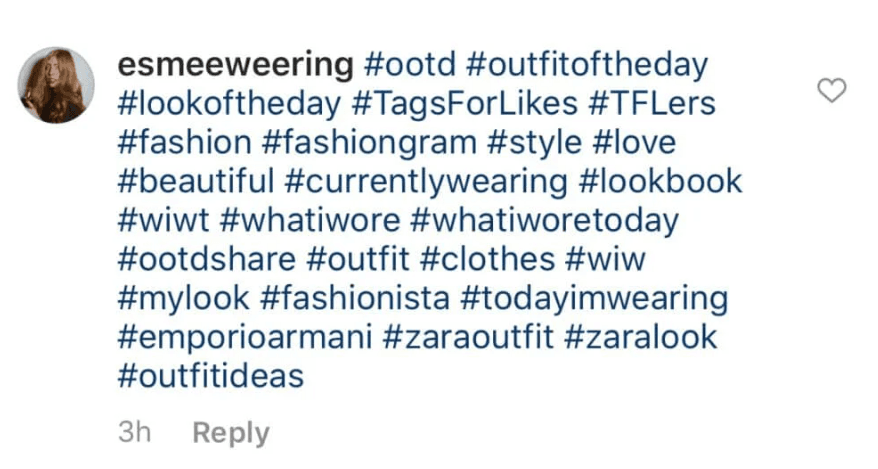
Hashtags still function as a discovery signal, but their impact has diminished as Instagram has improved its contextual understanding of content. Highly specific, niche hashtags tend to outperform high-volume generic hashtags for reaching genuinely relevant audiences. The timing of posts matters less than it once did due to algorithmic distribution, but there is still logic to posting when your specific audience is most active - check your Instagram Insights for peak activity windows.
Instagram Shopping: From Discovery to Purchase
For e-commerce brands, Instagram Shopping is the infrastructure investment with the clearest revenue return. It allows products to be tagged directly in feed posts, Stories, Reels, and the Shop tab, creating a direct path from content to product page without requiring the user to navigate away and search manually.
The setup requires connecting your Instagram Business account to a Facebook catalog, either directly or through an e-commerce platform integration like Shopify. Once approved by Meta, you can tag products in new and existing posts, and your profile gains a dedicated Shop tab. Pair Instagram Shopping with a strong ecommerce SEO strategy to capture both social discovery and organic search intent from the same product catalog.
The mistake brands make with Shopping features: Tagging products in posts without ensuring the product page experience matches the quality of the content that drove the click. A beautifully styled product post that leads to a sparse or poorly designed product page creates a trust gap that loses the conversion it earned.
Instagram DM Marketing and Broadcast Channels
One of the most underutilized channels in Instagram's commercial toolkit is direct messaging - both inbound DMs from prospects and outbound broadcast channels.
Instagram Broadcast Channels, launched in 2023 and growing significantly through 2025-2026, allow brands to send one-way messages to subscribers who opt in. For Indian brands, this creates a WhatsApp-adjacent retention channel within Instagram itself: push product launches, limited-time offers, and exclusive content to subscribers who have actively opted in.
Inbound DMs from paid ad clicks, Stories CTAs, and link-in-bio traffic represent high-intent conversion moments. Brands that have a structured response protocol - including automated quick replies for common queries and fast human handoff for purchase-ready conversations - convert these moments at meaningfully higher rates than brands treating DMs as overflow customer service.
Want an Instagram strategy built around measurable revenue, not follower counts? - We audit your current setup, identify the highest-leverage content and targeting gaps, and build a roadmap specific to your category. Request a free Instagram marketing audit →
Paid Advertising on Instagram: Making the Economics Work
Instagram's organic reach has declined over the years as the platform has matured and competition for feed space has increased. For most brands, a paid component is necessary to reach audiences beyond existing followers at a meaningful scale.
The most important strategic decision in Instagram advertising is not which ad format to use - it is audience architecture. Tightly defined audiences based on purchase behavior, interest specificity, and lookalike modeling from high-LTV customer segments consistently outperform broad audiences with no behavioral or interest filtering.
Retargeting campaigns should be running continuously for any e-commerce brand with meaningful Instagram traffic. Users who have engaged with your profile, viewed your shopping posts, or visited your website represent warm audiences with demonstrated interest. Brands scaling this layer benefit from working with a Meta Ads agency that manages audience segmentation and creative testing as a dedicated function.
Lookalike audiences built from your best customer cohorts - defined by high LTV, repeat purchase rate, or specific product affinity - extend the performance characteristics of your best customers to new prospect populations. The quality of a lookalike audience depends entirely on the quality of the seed audience.
Creative testing is not optional for brands running Instagram ads at scale. The same audience served by different creatives can produce dramatically different performance outcomes. Build a systematic creative testing process: test one variable at a time, allocate enough budget to reach statistical significance, and document what drives performance so you can replicate it.
Influencer Marketing: Strategy That Drives Real ROI

Instagram influencer marketing produces variable outcomes for a consistent reason: brands invest in influencer selection and creative direction but not in measurement and structure. The influencer posts, the brand sees an engagement number, and no one can attribute revenue to the campaign.
A more rigorous approach starts with defining success before the campaign begins. For direct response objectives, conversion tracking through unique discount codes, UTM-tagged links, or Instagram Shopping attribution is the only way to measure whether the investment generated revenue.
Micro-influencers - typically accounts with 10,000 to 100,000 followers in a specific niche - consistently deliver better cost-per-engagement and often better conversion rates than larger generalist accounts. For Indian brands specifically, platforms like Plixxo, OPA, and Winkl connect brands with verified micro-influencers whose audience demographics and engagement quality are documented.
The evaluation criteria that matter for influencer selection:
- audience quality over follower count,
- engagement rate relative to follower size,
- comment quality and authenticity,
- content alignment with your brand's aesthetic and values, and
- past performance data if available.
A creator with 40,000 highly engaged followers in your exact product category will outperform a creator with 400,000 followers in a loosely adjacent category for most conversion-oriented campaigns. Long-term partnerships with a small number of well-aligned creators outperform one-off campaigns for brand affinity building.
The Engagement Layer: Captions, Comments, Community
Instagram's algorithm rewards engagement, and engagement is a function of whether your content gives people a reason to interact. Captions are underutilized as engagement drivers by brands that treat them as descriptions of the visual content rather than as conversation starters.
The most effective captions for engagement end with a clear, specific reason to comment: a question that invites a genuine response, a prompt to tag someone, or a choice between options. "What would you choose?" outperforms "Let us know in the comments" because it removes the open-ended thinking required to respond.
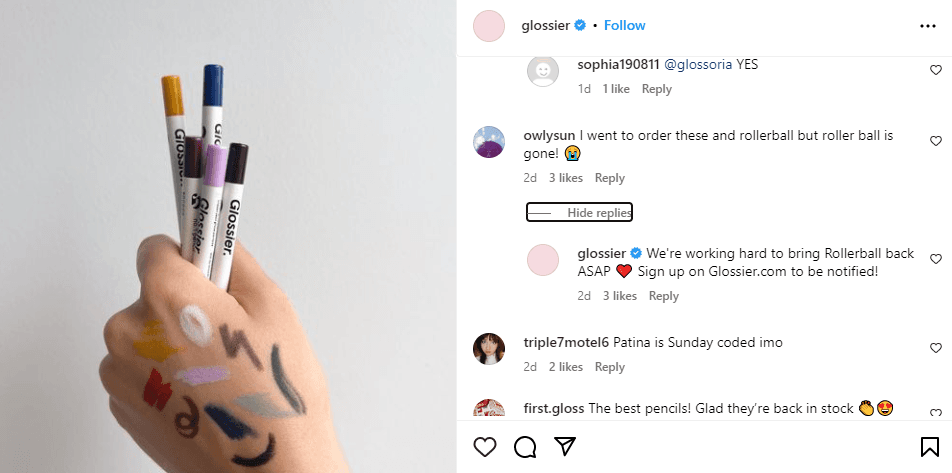
Responding to comments is not community management overhead - it is an algorithm optimization. Each comment-and-response exchange generates additional engagement signals that extend the post's reach. Brands that respond to every comment within the first hour of posting consistently see better distribution than those that ignore the comment section.
Marketing Analytics: What to Track vs. Ignore
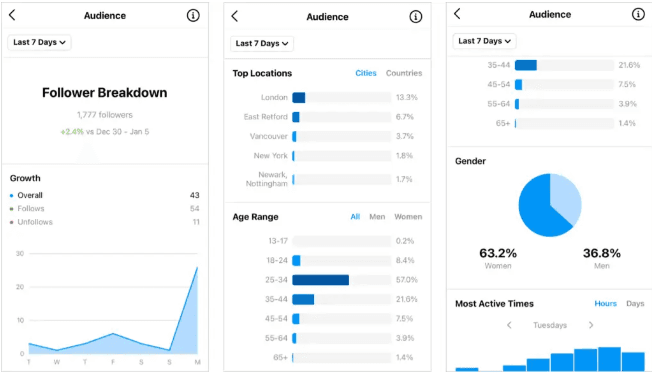
Instagram Insights provides enough data to make meaningful optimization decisions if you focus on the right metrics.
Saves are one of the highest-quality engagement signals on the platform and are significantly underweighted in most brand analytics reviews. A user who saves your post has signaled that they found it valuable enough to return to. For content marketing, save rate is a better proxy for genuine content value than like rate.
Link clicks from bio and Stories are the most direct revenue-attribution metric available in Instagram's native analytics. Tracking these over time, and connecting them to website sessions and conversion data in your analytics platform with UTM parameters, creates the bridge between Instagram activity and business outcomes.
Story completion rate - the percentage of viewers who watch through a multi-frame Story sequence without tapping away - is a useful indicator of content quality and audience interest that most brands do not track systematically. Declining completion rates often precede declining overall engagement and are an early warning to review content strategy.
Follower growth rate is worth monitoring as a trend metric rather than an absolute target. Consistent follower growth in your target audience segment indicates that your content is being discovered and valued by relevant people. Follower growth driven by giveaways or irrelevant viral content improves the number but degrades the audience quality.
Frequently Asked Questions
How do you grow Instagram followers organically for an Indian brand?
Consistent Reels publishing combined with active engagement in niche communities is the most reliable organic growth engine for Indian brands. Use specific, niche hashtags rather than high-volume generic ones. Collaborate with micro-influencers in your exact product category - platforms like Plixxo and Winkl can help identify verified creators. Respond to every comment on your own posts and engage proactively with content in adjacent accounts your target audience follows.
What is the best time to post on Instagram for Indian audiences?
Research suggests 7-9 AM, 12-2 PM, and 8-11 PM IST as peak engagement windows for most Indian consumer categories. However, the most reliable guide is the "Most Active Times" data in your own Instagram Insights - this varies by niche, and following your specific audience's behavior will outperform any generic benchmark.
Is Instagram or LinkedIn better for B2B marketing in India?
LinkedIn is the stronger platform for B2B lead generation and professional credibility in India, particularly for SaaS, consulting, finance, and enterprise categories. Instagram works better for B2B brands with a strong visual product dimension or those targeting founders and marketers who consume content socially. For most B2B categories, LinkedIn generates higher-quality leads; Instagram supports brand awareness and thought leadership with a broader audience.
How do I set up Instagram Shopping in India step by step?
Switch to a Business account, connect it to a Facebook Page, upload your product catalog via Facebook Commerce Manager or through a Shopify or WooCommerce integration, submit the account for Instagram Shopping review, and once approved, tag products in posts and Stories. Ensure product images meet Meta's commerce guidelines and that your website URL is verified before submitting.
Why Platform Dependency Is a Brand Risk Worth Managing
One honest observation that most Instagram marketing guides skip: building your primary customer acquisition or retention infrastructure on Instagram creates platform dependency that carries real business risk.
Algorithm changes, reach declines, ad cost inflation, and policy shifts are outside your control and have materially affected brand performance on Instagram multiple times since 2012. The brands with the most durable growth are those that use Instagram to drive audiences into owned channels - specifically email lists, SMS programs, and direct website traffic - rather than treating Instagram reach as an end state.
Every Instagram strategy should include deliberate mechanisms for converting Instagram audiences to owned channels. Lead magnets promoted through Stories, email capture on the post-click landing page, and exclusive content or offers available only to email subscribers create pathways out of the rented Instagram environment and into an asset you own and control. This same argument is developed in detail for content marketing broadly in our piece on why blog traffic metrics often mislead.
This is not an argument against investing in Instagram. It is an argument for treating Instagram as a customer acquisition vehicle for your owned channels rather than as the destination itself.
Conclusion
The commercial Instagram strategy comes down to a simple principle: strategy over frequency, measurement over vanity. Brands that decide what Instagram is for before they decide what to post - and that track outcomes in terms of link clicks, DM conversions, and Shopping revenue rather than follower counts - consistently outperform brands that optimize for the feed and then wonder why the revenue does not follow.
The investment in social media marketing services pays its highest return when it is structured around this commercial logic from the start. Define the objective, build the infrastructure, measure what matters, and iterate on what the data shows - not on what looks good in the monthly report. If you are comparing agencies, start with the best social media agencies in India.
Ready to build an Instagram strategy that drives measurable revenue? - Request a free Instagram marketing audit and we'll review your current setup, content mix, and targeting to identify where the highest-leverage gaps are. Book a free strategy call →

Aditya Kathotia
Founder & CEO
CEO of Nico Digital and founder of Digital Polo, Aditya Kathotia is a trailblazer in digital marketing. He's powered 500+ brands through transformative strategies, enabling clients worldwide to grow revenue exponentially. Aditya's work has been featured on Entrepreneur, Economic Times, Hubspot, Business.com, Clutch, and more. Join Aditya Kathotia's orbit on LinkedIn to gain exclusive access to his treasure trove of niche-specific marketing secrets and insights.