

Content marketing is not a blogging strategy. That framing undersells it and leads most businesses to invest in it half-heartedly, then wonder why it underperforms.
Done properly, content marketing is a customer acquisition system. It creates compounding organic visibility, builds the kind of brand authority that paid media cannot manufacture, and generates leads around the clock without ongoing ad spend.
The businesses that treat it as a serious growth function consistently outperform those that treat it as a publishing calendar. Brands that want this outcome without building the entire operation in-house often turn to dedicated content marketing services India providers who bring both the editorial depth and the SEO infrastructure needed to make the system work.
Here are 11 specific, commercially relevant benefits worth understanding before you decide how much of your marketing investment belongs here.
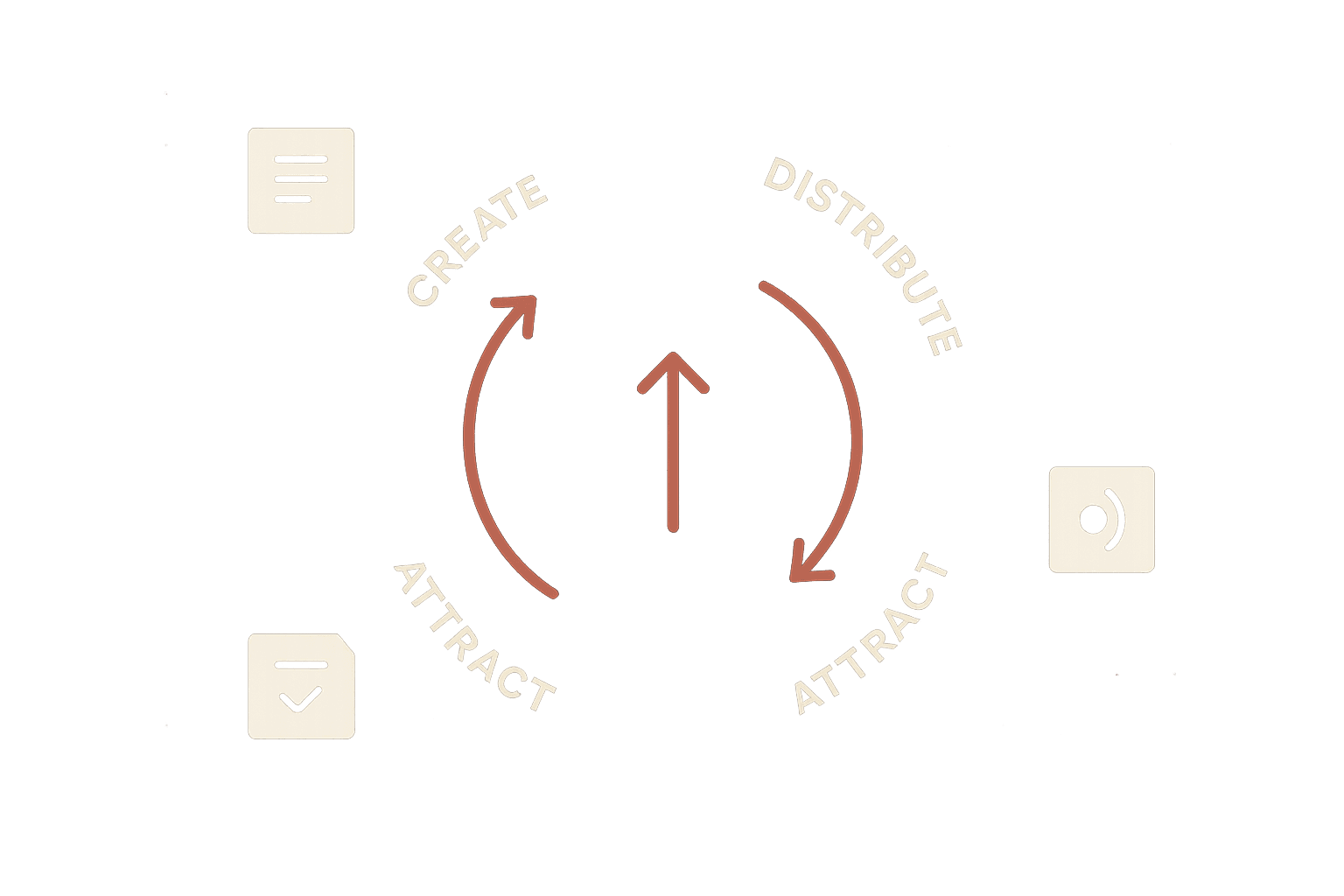
11 Ways Content Marketing Benefits Brands
1. Organic Visibility: Being Found When Buyers Are Looking
Search behavior has replaced word-of-mouth as the primary way people discover businesses. Over 59% of the global population uses the internet, and the vast majority of product and service research starts with a search query.
Optimized content positions your business in front of that demand. A buyer researching a problem your product solves can find your content, engage with your expertise, and enter your funnel without you spending a dollar on that interaction.
The compounding nature of this matters. A well-ranked piece of content generates traffic for months or years. Contrast that with paid search, where visibility disappears the moment you stop spending. Content marketing builds an asset. Paid media rents a channel.
For Indian SMEs specifically, the opportunity is significant: regional and Hindi-language content remains significantly underserved compared to English content, meaning businesses willing to invest in regional-language publishing can achieve competitive rankings faster than in crowded English-language categories.
Common mistake: Publishing content without a keyword strategy or search intent alignment. Content that no one is searching for generates no organic traffic regardless of quality.
2. Lead Generation That Runs Without You
Content marketing generates approximately 3x more leads than traditional outbound marketing, typically at 62% lower cost. That ratio holds because the leads are self-qualified. Someone who finds your content, reads it thoroughly, and downloads a resource or fills out a form has already demonstrated interest and intent.
Dropbox is a useful reference here. A simple two-minute tutorial video on their homepage, explaining the core product benefit, drove a 60% increase in sign-ups. The content did the explaining that a sales team would otherwise need to do in an initial call. That efficiency scales.
The practical implication: Well-constructed content acts as a 24/7 lead capture mechanism. It works while your team is not working. It answers questions that would otherwise require a sales conversation. And it filters out low-fit prospects before they consume your team's time.
Strategic tip: Gate high-value content like detailed guides, templates, or research reports behind a lead capture form. This converts passive readers into identified prospects. The content provides the incentive. The form provides the data.
3. Authority Building That Paid Media Cannot Replicate
There is a meaningful difference between being seen and being trusted. Paid ads create the former. Consistent, substantive content creates the latter.
When your brand consistently publishes content that helps buyers think more clearly about a problem, make better decisions, or understand a complex topic, you earn a different category of credibility. You become a reference point. Buyers return to your content before they buy. They share it with colleagues. They cite it in internal discussions.
That authority position has commercial value that is difficult to measure in last-click attribution models but straightforward to observe in sales cycle behavior. Deals close faster when the prospect already trusts your expertise. Objections are fewer. Price sensitivity decreases.
Building authority requires patience. It typically takes six to twelve months of consistent, high-quality publishing before the authority signal becomes commercially significant. But once built, it is durable in ways that ad-driven brand awareness is not.
4. Support for Long and Complex Sales Cycles
Not every purchase decision happens in a single session. B2B deals, high-ticket consumer purchases, and any category involving significant financial or operational risk typically involve extended research phases, multiple stakeholders, and repeated return visits to evaluate options.
Salesforce has built one of the most sophisticated examples of content-supported sales cycles in enterprise software. Their library of eBooks, webinars, blog posts, and case studies maps directly to each stage of a buyer's decision-making process. A prospect can move from problem awareness through to vendor evaluation entirely through Salesforce content before ever speaking to a salesperson.
The commercial benefit is measurable. When prospects arrive at a sales conversation already educated about the category, the product, and the value proposition, the sales cycle compresses. The conversion rate improves. And the qualified pipeline is larger because content has done early-stage nurturing at a scale a sales team cannot match.
Common mistake: Treating content as an awareness-only tool and neglecting decision-stage content. Comparison guides, case studies, ROI calculators, and detailed product explanations are often the highest-converting content a brand publishes.
5. Competitive Differentiation That Compounds Over Time
In markets where products or services are commoditized, content is one of the clearest differentiators available. It communicates how you think, what you know, and what you stand for in ways that a pricing page or feature list cannot.
Red Bull's approach is the extreme version of this principle. They built an entire media operation around extreme sports and adventure content, effectively separating themselves from every other energy drink brand through the content identity they created. The product is caffeine and sugar. The brand is adrenaline, aspiration, and community. Content built that gap.
Closer to home: Zerodha's educational content platform - Varsity - became one of India's most trusted personal finance learning resources. It built a brand association with financial literacy that no paid advertising could have manufactured at the same cost, and it attracted users who became customers precisely because the brand had already demonstrated genuine expertise.
Most businesses do not need Red Bull's production budget or Zerodha's engineering capacity to achieve meaningful differentiation. Publishing consistent, genuinely useful content in your specific niche creates a competitive position that is hard for rivals to replicate quickly.
6. Content as the Fuel for Every Other Marketing Channel
A well-constructed piece of content does not live only on your blog. It generates material for every other channel you operate.
A single substantive article can produce:
- Multiple social media posts drawing on specific insights or data points
- An email newsletter section or a full standalone send
- A script for a short-form video or podcast episode
- A visual graphic or infographic distilling the key points
- A script for a sales conversation or onboarding resource
- Source material for a PR pitch or industry commentary
This multiplier effect changes the economics of content investment. The cost is paid once. The distribution is ongoing across multiple channels and audiences. Brands that think this way extract significantly more value from each piece of content than those treating each channel as a separate content production problem.
Gated content adds another layer. Detailed guides or research reports, placed behind a lead capture form, generate contact data from readers who self-select based on high topic relevance. Those leads are already pre-qualified by the content they chose to download.

7. Relationship Building at Scale
Content creates relationships at a scale no sales team can replicate. A single article can reach thousands of readers simultaneously. Done well, it communicates empathy, expertise, and genuine care for the buyer's problem in ways that feel personal even at volume.
The mechanism is straightforward. When your content consistently helps your audience think more clearly, solve problems, or make better decisions, they develop a relationship with your brand that precedes any commercial interaction. By the time they are ready to buy, the relationship already exists.
This dynamic shortens the trust-building phase of the sales process and increases the probability that buyers who have been reading your content will choose you over a competitor with whom they have no relationship.
Brand advocates - the customers who actively recommend you without being asked - are most commonly created through this kind of ongoing value delivery. They are also the most cost-efficient acquisition channel you have.
8. Search Engine Authority Through Consistent Value Delivery
For smaller businesses, the compounding nature of this benefit is particularly relevant. An experienced SEO agency for SMEs can accelerate the process by combining content strategy with technical hygiene, so that early content investments begin producing ranking traction sooner.
Google's core ranking systems consistently reward content that demonstrably serves readers well. Dwell time, return visits, backlinks, and engagement signals all reflect whether your content is earning the attention it receives.
The data point worth noting: Companies that publish regular blog content accumulate 97% more inbound links than those that do not. Inbound links remain one of the most significant signals in organic ranking algorithms. Content that earns links earns rankings. Rankings earn traffic. Traffic, properly structured, earns revenue.
The relationship between content quality and search authority is not linear in the short term. Six to twelve months of consistent publishing is typically required before the compounding effect becomes visible in ranking and traffic data.
Strategic tip: Focus on content depth and genuine expertise over publishing frequency. One comprehensive, authoritative piece outperforms ten thin articles in both search performance and reader response.
9. Partnership and Collaboration Opportunities
Quality content signals credibility to potential partners in ways that sales conversations and capability documents cannot. When another brand or publisher sees that your content is substantive, well-distributed, and valued by an audience, you become an attractive collaboration partner.
Red Bull and GoPro is the well-known example of this dynamic working at scale. Red Bull's extreme sports content was a natural home for GoPro's camera footage. The collaboration amplified both brands with audiences that were already aligned. The content created the context for the partnership to make sense.
At smaller scales, the same principle applies. Guest contributions to industry publications, co-authored research, joint webinars, and cross-promotional content partnerships all become easier to initiate and more attractive to potential partners when your content library demonstrates established expertise and audience engagement.
10. Content as the Foundation for a Unified Marketing Strategy
No marketing channel operates in isolation. Paid media, email, social, SEO, PR, and sales enablement all perform better when they draw from a coherent content foundation.
The practical architecture looks like this: A central piece of substantive content - a detailed guide, a research report, a comprehensive how-to - acts as the anchor from which campaign-specific assets are derived. Social ads point to it. Email sequences reference it. Sales teams share it. PR pitches use it as a credential.
This approach creates message consistency across every touchpoint a buyer encounters. It also concentrates your content investment on fewer, higher-quality pieces rather than spreading effort thin across dozens of disconnected assets.
The brands with the strongest content marketing returns are almost always the ones that have connected their content strategy to their broader marketing architecture, rather than treating it as a standalone publishing function.
11. Brand Loyalty Built Through Ongoing Value Delivery
Customer retention is a content marketing outcome that receives far less attention than acquisition. That is a significant oversight.
Starbucks' "My Starbucks Idea" platform illustrates the loyalty principle well. By creating a content environment where customers could contribute ideas and see those ideas implemented, Starbucks built a community with a genuine sense of ownership over the brand. The engagement generated loyalty that advertising alone cannot produce.
For most brands, the loyalty mechanism is simpler: Consistent delivery of content that helps existing customers get more value from what they already purchased. Onboarding content, advanced usage guides, industry updates, and community-building content all serve this function.
A customer who regularly engages with your content is less likely to churn, more likely to expand their relationship with your brand, and more likely to refer others. The LTV implications of that behavioral shift are significant. And the cost of delivering ongoing content value to existing customers is a fraction of the cost of acquiring new ones.

The Commercial Case for Taking Content Seriously
Content marketing is not the fastest path to revenue. If your business needs leads next week, paid search or outbound are more appropriate tools.
But if your business needs a durable, compounding acquisition channel that reduces CAC over time, builds brand authority that compounds into pricing power, and creates customer relationships that support retention, content marketing is one of the highest-ROI investments available.
The decision framework is straightforward: If you need leads within 30 days, content marketing is the wrong primary tool. If you need a lower-cost acquisition channel 12 months from now, content marketing is the right investment. The best programs start both conversations at the same time - running paid for immediate pipeline while building organic for long-term efficiency.
The businesses that treat content marketing as a serious growth function - with proper strategy, consistent execution, and genuine expertise in the content itself - consistently outperform those that treat it as a side activity or a checkbox.
Frequently Asked Questions
What type of content should a small business in India start with?
Start with content that directly answers the questions your customers ask before buying. For most Indian SMEs, this means a combination of practical how-to guides optimized for long-tail search queries, one or two case studies showing real outcomes, and a foundational explainer covering what you do and who it is for. Prioritize quality over volume - two well-researched pieces per month will outperform ten thin posts.
How much should an SME budget for content marketing in India?
A realistic starting budget for an Indian SME is ₹15,000 to ₹40,000 per month for a capable content partner or freelance writer plus basic SEO tooling. This covers a consistent publishing cadence of two to four pieces per month. The return on this investment typically becomes commercially visible at six to twelve months. It is worth noting that content marketing costs 62% less than outbound marketing while generating three times more leads over a sustained period - the economics improve with time, not immediately.
What is the difference between content marketing and SEO?
SEO is the technical and strategic practice of making your content findable in search engines - keyword research, on-page optimization, link building, and site structure. Content marketing is the practice of creating content that is worth finding. The two are interdependent: great content without SEO stays invisible, and strong SEO without quality content generates traffic that does not convert. The most effective programs treat them as a single integrated function.
Can content marketing work without a blog?
Yes. A blog is one vehicle for content marketing, not the only one. YouTube videos, LinkedIn newsletters, podcast series, email courses, and research reports all serve the same strategic function - building an audience and earning trust through consistent value delivery. The right format depends on where your audience spends time and what format best serves your content's purpose.
How do I measure whether my content marketing is working?
Track organic-attributed conversions and leads alongside traffic metrics. Page views alone are not a business outcome. Set up goal tracking in Google Analytics to connect content consumption to form fills, sign-ups, or purchases. Also track which pieces appear most frequently in sales conversations and closed deals - that data, collected informally from your sales team, is often the most commercially useful signal in early-stage programs.
Not sure what a content strategy built for your business should look like? We audit existing content programs and build strategies from scratch for Indian SMEs and growth-stage brands. Get a free content audit →

Aditya Kathotia
Founder & CEO
CEO of Nico Digital and founder of Digital Polo, Aditya Kathotia is a trailblazer in digital marketing. He's powered 500+ brands through transformative strategies, enabling clients worldwide to grow revenue exponentially. Aditya's work has been featured on Entrepreneur, Economic Times, Hubspot, Business.com, Clutch, and more. Join Aditya Kathotia's orbit on LinkedIn to gain exclusive access to his treasure trove of niche-specific marketing secrets and insights.