

Two years into the rebrand, most marketing leaders are still treating X as a renamed version of Twitter. That framing creates confusion. It hides the real strategic question. The issue is not whether your brand should be on X.
The real question is this: Does X, under Musk's direction, still belong in the same place in your marketing mix? Or has its role fundamentally changed?
The answer is not obvious, and it varies significantly by business type, audience, and what you were actually getting from Twitter to begin with.
This piece provides a framework for thinking through that decision and an honest assessment of what the platform has become, what it is becoming, and where the real leverage points are for brands that choose to stay.
What the Rebrand Was Actually About
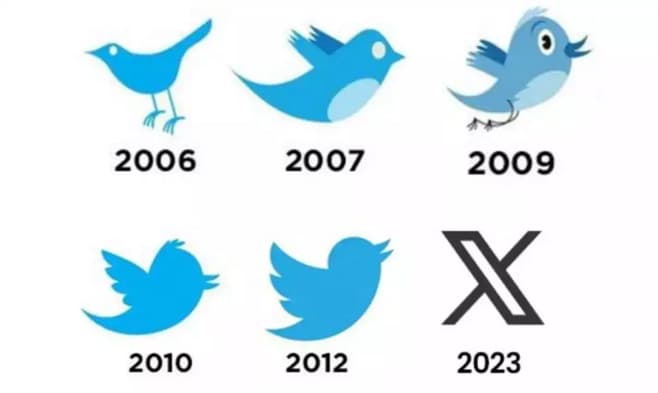
Elon Musk's acquisition of Twitter in October 2022 and the subsequent rebrand to X in July 2023 are frequently discussed as a branding story. It is more accurately a thesis on what a social platform should ultimately become.
The X vision is the super app model, i.e., a single platform integrating social content, messaging, payments, financial services, and AI-powered utilities.
Think of WeChat's role in China's digital economy: a platform so embedded in daily life that users conduct commerce, communicate, consume content, and manage money without ever leaving the app. That is the declared aspiration for X.
The rebrand was not purely cosmetic.
Merging Twitter Inc into X Corp, establishing X.AI as a separate entity focused on artificial intelligence (Grok, the AI assistant, is now integrated directly into the platform), and aggressively pursuing payment licensing across U.S. states all point to a structural ambition that goes well beyond content distribution.
Whether that vision is achievable in Western markets where regulatory, competitive, and cultural conditions are fundamentally different from the environments where super apps have succeeded is an open question. But the intent shapes what the platform is being built toward, which should inform how you think about allocating resources to it.
Musk's attachment to the X identity predates the Twitter acquisition by decades. His first significant venture, the financial startup X.com founded in 1999, eventually merged and became PayPal. SpaceX, Tesla's Model X, and X Corp form a consistent pattern of naming choices that reflect something more personal than marketing strategy.
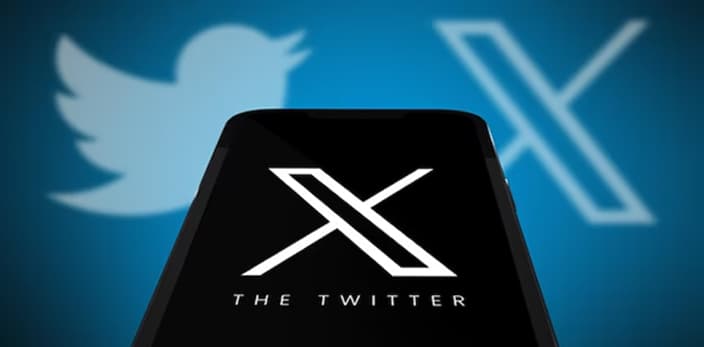
Understanding that context helps explain why the rebrand happened despite significant user resistance - this was not a calculated market positioning decision, it was an expression of a longer-term identity project.
What Actually Changed on the Platform
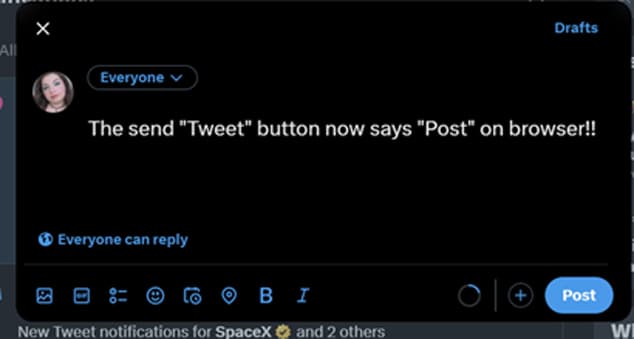
The rebrand itself was largely cosmetic: a logo swap, a domain redirect, a name change in the app stores. But the platform changes since Musk's acquisition have been substantive, and they have reshaped the environment in ways that matter for brands.
Algorithmic and policy shifts.
Twitter's previous content moderation approach was replaced with a substantially lighter-touch model, framed as a commitment to free speech absolutism.
In practice, this changed the content environment significantly:
- More politically charged content.
- More controversial figures returned to the platform after bans.
- Different enforcement patterns around misinformation.
Brands that built audiences around Twitter's previous content environment encountered a different context.
Verification and reach economics.
The introduction of paid verification (formerly the blue checkmark, now tied to X Premium subscriptions) changed the visibility dynamics. Organic reach for non-paying accounts has been reported to decline in favor of premium subscribers.
For brands, this introduced a pay-to-play dynamic into what had previously been a more meritocratic content distribution system.
Creator monetization.
X introduced revenue sharing for creators meeting certain threshold requirements. As a result, creators optimizing for platform revenue behave differently from creators building audiences organically.
This shifted content incentives, and the downstream effect on content quality and format has been uneven.
AI integration.
Grok, X's AI assistant, is integrated into the platform experience for premium subscribers.
The longer-term implications for how users interact with content, how information surfaces, and how advertising integrates with AI-driven recommendations are genuinely uncertain and worth monitoring.
The Net Effect: X in 2026 is a different content environment from Twitter in 2021. Audience behavior, content norms, and reach mechanics have all shifted. Brands that have not revisited their X strategy since before the acquisition are likely operating on outdated assumptions.
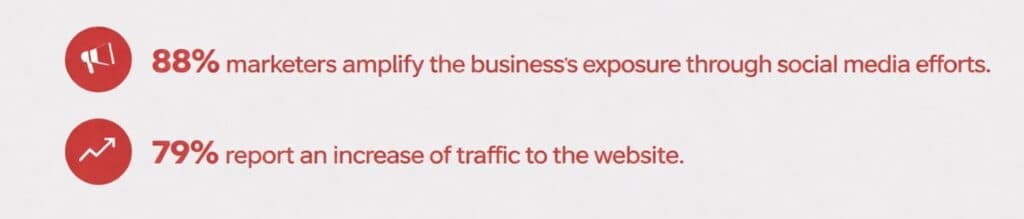
Is X the Right Platform for Your Business?
This is a more nuanced question than it appears, and the answer depends on several specific variables - not on general pronouncements about whether X is "good" or "bad" for brand marketing.

Who is your audience, and are they actually on X?
X skews toward specific demographic and psychographic segments: politically engaged users, finance and technology professionals, journalists and media figures, sports fans, and certain creator communities. It is not a mass-market platform in the way Meta properties are.
Before investing in X as a channel, validate that your target audience is meaningfully present there. This does not just mean some of them have accounts, but that they are actively engaging with content relevant to your category.
Competitive analysis helps here:
- Are direct competitors building engaged audiences on the platform?
- Are the accounts and conversations in your industry generating real interaction?
That is better evidence than demographic statistics.

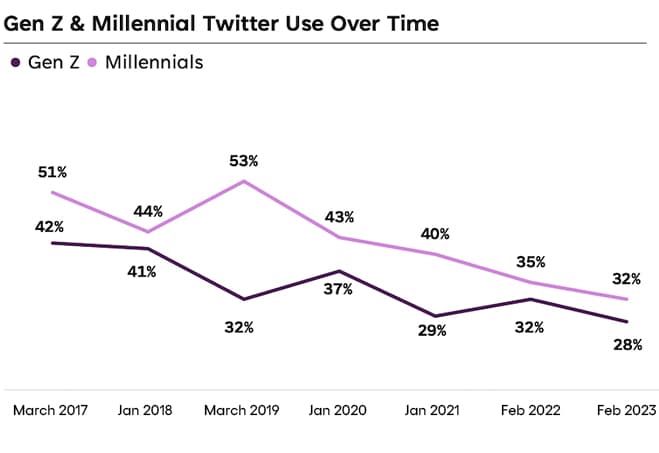
If your audience skews toward Gen Z, Instagram Reels, YouTube Shorts, Moj, and Josh retain significantly stronger positions in India. If your audience is older, Facebook and LinkedIn often produce better engagement and conversion data.
X has real concentrations of influence in specific verticals, including financial services, B2B technology, political discourse, sports, and relatively lower penetration in others.
What were you getting from Twitter, and do you need it?
Twitter served a few distinct functions for brands that are worth separating:
Real-time conversation and cultural relevance
The ability to participate in trending topics, breaking news, and public discourse as they happen. X still serves this function, though the content environment is different.
Customer service and direct response
Many brands used Twitter as a lightweight, public-facing customer service channel. This still works on X for brands whose customers are there.
Thought leadership and brand voice for B2B
Executives and brands in professional services, technology, finance, and adjacent categories built meaningful reach through consistent, substantive posting. This still works on X, though the reach economics have changed.
Media and journalist relationships
X remains the platform where journalists, analysts, and media figures are most active. For PR and communications functions, maintaining a credible presence on X has real value regardless of broader consumer marketing considerations.
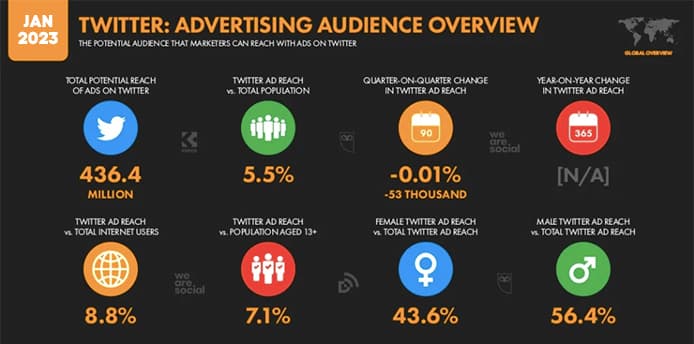
If the value you were extracting was primarily brand awareness at scale, the math is more challenging. X's advertising reach has declined, key advertiser departures created gaps in the ecosystem, and the content environment has shifted enough that brand safety considerations are now a legitimate factor.
What is the cost relative to the return?
Organic social requires time, not budget. Paid social requires both.
The decision framework is straightforward:
- If your audience is on X and you can generate engagement that translates to measurable business outcomes - site traffic, lead generation, customer acquisition, brand recall - the investment is justified.
- If you are maintaining a presence primarily because "you should be on social media" without evidence of downstream impact, that is a resource allocation question worth asking honestly.
How to Build an Effective X Presence for Your Business
Assuming you have validated that X makes sense for your audience and your goals, the strategic question is how to operate on the platform in a way that produces returns.

Content that performs on X is structurally different from content elsewhere
X's content environment rewards brevity, specificity, and either strong opinion or high utility. The platform has a fast scroll dynamic where content that does not communicate value within the first line does not get read. This creates a content discipline that is actually useful: If you cannot express why something matters in one sentence, you probably have not thought clearly enough about why it matters.
Content formats that work:
- Sharp opinions with clear reasoning, timely commentary on relevant industry developments,
- Concrete data or insights that are genuinely useful to your audience,
- Questions that generate substantive replies, and
- Threads that develop a complex idea in digestible steps.
Content formats that do not work:
- Press release language, promotional announcements without genuine value,
- Generic motivational content, and
- Posts that would be equally at home on any platform.
The brands that build meaningful audiences on X treat it as an editorial channel, not an amplification channel.
The difference is consequential: An editorial mindset means you are creating content worth reading, which earns organic reach and builds genuine audience relationships. An amplification mindset means you are broadcasting messages you want people to receive, which produces declining engagement and platform invisibility over time.
Consistency matters more than volume
Posting frequency on X is often overstated as a success factor. Consistency matters more.
An account that posts three substantive, well-reasoned pieces of content per week and actually engages in replies will build a better audience than an account posting ten times daily with thin content.
The engagement dynamic is particularly important on X. The platform rewards conversation:
- Accounts that respond thoughtfully to replies,
- Participate in relevant threads, and
- Build actual relationships with other accounts in their space, and
- Develop organic reach that cannot be bought.
For brands, this means someone needs to own the voice authentically, not just manage a content calendar.
Scheduling is a tool, not a strategy
The mechanics of tweet scheduling are straightforward. Tools like Buffer, Hootsuite, or X's native scheduling allow you to publish at optimal times without requiring real-time availability. But the limitation of scheduling is worth noting: scheduled content that goes unmonitored creates risk.
A post that lands during an unrelated controversy, or generates replies that go unanswered for 12 hours, produces a different outcome than the same post under normal conditions.
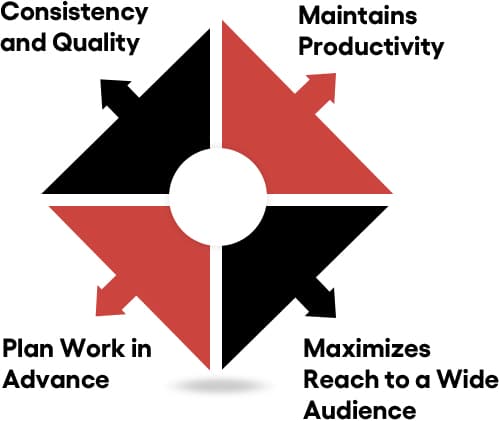
Scheduling should be paired with active monitoring and a clear protocol for when to adjust or pause.
Posting time optimization is real but often overstated. The marginal gain from posting at the optimal hour versus a reasonable hour is smaller than the gain from publishing genuinely useful content regardless of timing.
Paid amplification on X: approach with current data
X's paid advertising environment has changed significantly since the rebrand. Advertiser departures, policy changes, and platform volatility affected both reach and brand safety conditions. Before running paid campaigns on X, get current data on performance benchmarks for your category - the numbers from 2021 or 2022 are not a reliable guide to what to expect now.
For most brands, paid social budgets allocated to Meta properties (Facebook and Instagram) continue to produce more predictable returns with better audience targeting infrastructure.
X paid advertising may still make sense for specific objectives:
- reaching journalists and media figures,
- engaging with high-income professional audiences in certain categories,
- participating in live event conversations.
However, it should be evaluated against current performance data, not assumed.
The Super App Thesis: What to Watch
The strategic question of how much organizational investment X deserves over the next few years is partly a bet on whether the super app vision makes meaningful progress in Western markets.
The payments infrastructure is the critical variable. If X successfully integrates financial services in ways that generate genuine user behavior change - people sending money, managing accounts, and transacting through the platform - the addressable commercial surface area for brands expands significantly.
The WeChat analogy becomes more relevant.
The conditions that made WeChat dominant in China are not easily replicated. These conditions were:
- a less fragmented app ecosystem,
- different regulatory environment,
- specific timing in the mobile adoption curve.
But the attempt is real, and payments licensing is actively being pursued. The outcome is genuinely uncertain, which means X's long-term strategic importance is also uncertain.
The practical implication for brand strategy: Maintain a credible presence if your audience warrants it, build the capabilities to operate on the platform effectively, but avoid over-investing in platform-specific content formats or audience-building strategies that would not transfer if the platform's trajectory changes again. Optionality has value in an environment with this much uncertainty.
Frequently Asked Questions
Should Indian brands prioritize X or Instagram Reels in 2026?
For most B2C Indian brands, Instagram Reels and YouTube Shorts deliver significantly better reach and ROI among the audiences that drive consumer purchases. X's active Indian user base skews professional and niche - valuable for B2B, financial services, media, and thought leadership, but a weaker mass-market channel than it was under the Twitter brand. Indian platforms like Moj and Josh have also grown substantially among regional language audiences. Audit your actual customer data to determine where your buyers spend time before allocating social media budget.
Has X's Indian user base declined since the Twitter rebrand?
X's Indian user base has not collapsed, but it has evolved. The platform retains strong engagement among technology professionals, startup founders, journalists, financial services professionals, and politically engaged users. Consumer categories that relied on Twitter for broad brand awareness have seen more meaningful audience migration to Instagram and YouTube. The practical test is category-specific: run competitive listening on X for your category and see whether meaningful buyer conversations are happening there.
What is the best content strategy for X in 2026?
Treat X as an editorial channel, not a broadcasting channel. The content that performs best is specific opinion with clear reasoning, original data or insights, timely commentary on industry developments, and threads that build a case step by step. Generic promotional content and motivational posts generate no traction. Brands that succeed on X invest in authentic subject-matter expertise rather than content volume.
How do I measure whether my brand's X presence is generating business value?
Define what business outcome you are trying to produce from X - site traffic, demo requests, journalist coverage, customer service resolution, thought leadership reach - and build tracking around it. UTM parameters on X links track referral traffic to your site. Journalist relationship development is tracked through coverage mentions and inbound inquiry volume. Customer service resolution is tracked through ticket deflection rates. Without clear outcome metrics before you start, you cannot distinguish whether X is contributing or consuming resource.
Should brands pay for X Premium to improve reach?
For accounts with active organic audiences in business-relevant categories, X Premium can improve reach and provides access to long-form post formats and analytics tools. For brands just starting on X or maintaining a minimal presence, the premium subscription cost is better allocated to content production. Verify whether the categories you are targeting show meaningful premium subscriber concentration before treating it as a reach investment.
Conclusion
The X rebrand did not change the fundamental question brands need to ask about social media allocation: does this platform reach my audience, and can I generate measurable business outcomes from it? What it did change is the evidence base for answering that question - which is why brands that are still operating on 2021 Twitter assumptions are making decisions with stale data.
For B2B brands in finance, technology, and media, X remains a high-value organic channel with a uniquely influential audience. For consumer brands targeting younger Indian audiences, Instagram Reels, YouTube Shorts, Moj, and Josh now represent better investments. The right answer is audience-specific, not platform-generic.
Not sure whether X belongs in your social media mix? We audit your current channel allocation against your actual audience data and recommend where the highest-ROI reallocation opportunities are - whether that is X, Instagram Reels, LinkedIn, or a combination. Get a Social Media Strategy Assessment →

Aditya Kathotia
Founder & CEO
CEO of Nico Digital and founder of Digital Polo, Aditya Kathotia is a trailblazer in digital marketing. He's powered 500+ brands through transformative strategies, enabling clients worldwide to grow revenue exponentially. Aditya's work has been featured on Entrepreneur, Economic Times, Hubspot, Business.com, Clutch, and more. Join Aditya Kathotia's orbit on LinkedIn to gain exclusive access to his treasure trove of niche-specific marketing secrets and insights.