

Humor is one of the most underutilized levers in brand marketing, and when it works, it works better than almost any other creative approach. Not because it is entertaining, though it is. Because it is disarming.
Most brand content triggers a defensive filter in readers and viewers the moment they recognize it as advertising. Humor short-circuits that filter. A piece of content that makes someone genuinely laugh is processed differently, remembered differently, and shared at rates that earnest promotional content rarely approaches. That is not an accident of personality or taste. It is how human memory and social behavior actually function.
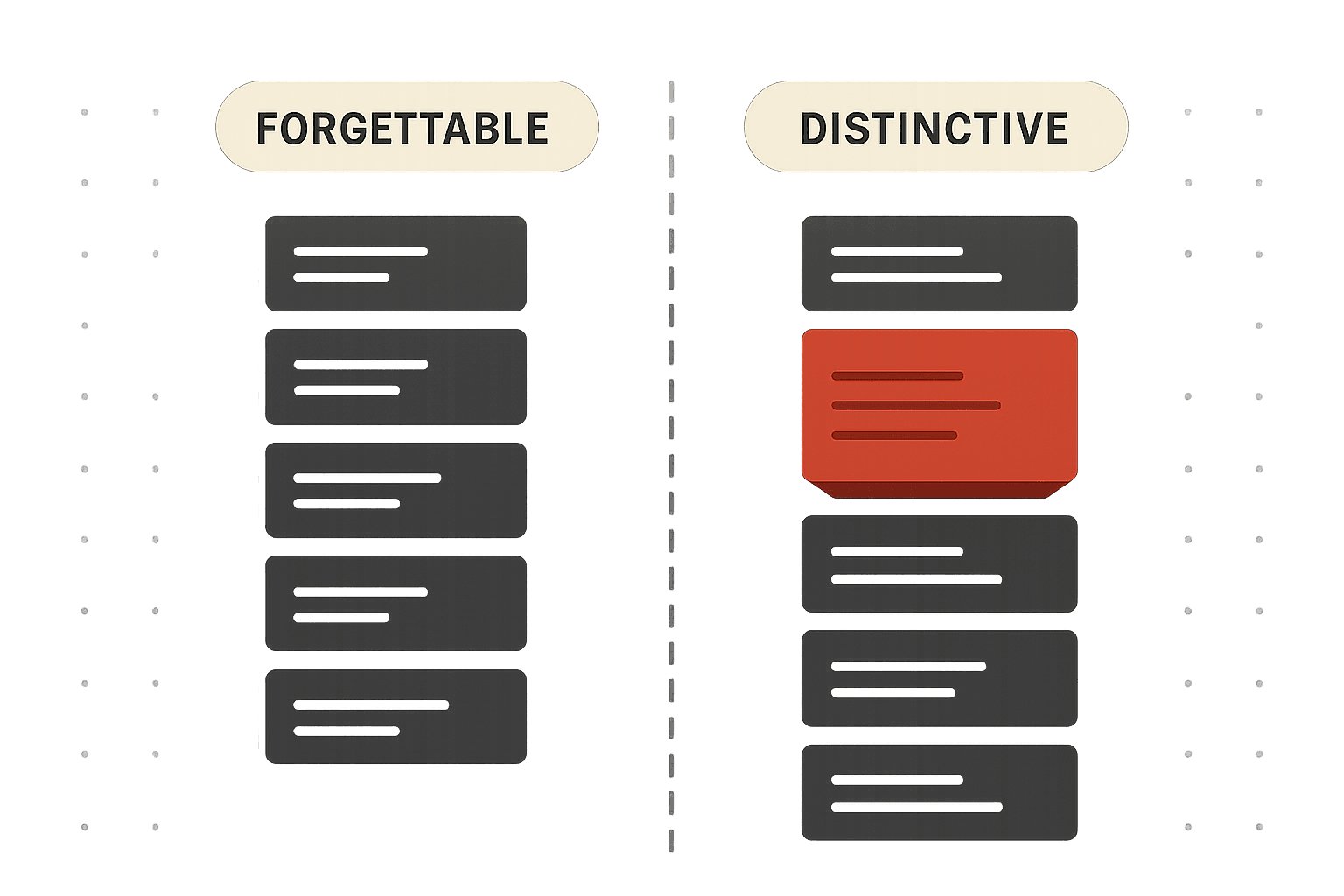
The commercial case for humor in marketing has strengthened considerably as content competition has intensified. The average consumer encounters hundreds of brand messages daily. Most of those messages are competent, forgettable, and structurally identical to the messages around them.
Humor creates distinctiveness, and distinctiveness is the precondition for everything else a marketing program is trying to accomplish.
Why Humor Works: The Psychology Behind the Strategy
The mechanism is worth understanding before getting into tactics, because brands that treat humor as a creative preference rather than a strategic tool tend to deploy it inconsistently and measure it inadequately.
Shared laughter creates a moment of alignment between the person laughing and the source of the joke. In brand contexts, that alignment transfers. When a brand makes you genuinely laugh, your emotional association with that brand shifts in a measurable way.
This is not abstract: Studies in consumer psychology consistently show that brands perceived as having a sense of humor generate stronger recall, higher purchase intent, and more word-of-mouth than comparable brands with neutral or serious positioning.
There is also a social currency dimension. Funny content gets shared because sharing it makes the sharer look good. When someone forwards a brand video, reposts a tweet, or screenshots an ad to send to friends, they are not endorsing the brand, they are associating themselves with something they found worth sharing. The brand gets reach. The sharer gets social credit.
That dynamic is why humor-driven content routinely outperforms polished, expensive campaigns in organic distribution metrics.
The memory encoding effect is equally important for brand strategy. Emotional content and humor produce a specific kind of emotional response that is encoded more durably in memory than neutral content. A consumer who laughed at your ad three weeks ago will recall your brand more readily when a purchase occasion arises than a consumer who saw your product specifications presented clearly and unmemorably.
Indian Brand Examples: What Humor Actually Looks Like in Practice
The most instructive examples of humor-driven brand marketing in India share a common characteristic: the joke is inseparable from what the brand stands for.
Fevicol has built one of the most durable brand identities in Indian advertising through decades of campaigns centered on a single absurd proposition - that Fevicol's bond is literally unbreakable. The bus overflowing with passengers held together by invisible force. The egg that cannot be cracked. These campaigns work because the humor is always in service of the product truth, not adjacent to it. The joke is the claim.
Zomato uses a different register: real-time, socially aware wit that meets urban Indian audiences in the context of their day. Meme-format social posts, self-aware acknowledgments of delivery delays, and campaigns that react to cultural moments without forcing corporate positioning into them. Zomato's humor works because it feels authored by someone who actually uses the product, not a brand committee.
Swiggy has taken a similar approach - particularly on social media - leaning into absurdist relatable content that captures the specific texture of ordering food at 11 PM when you know you should not. The humor is specific enough to feel personal and broad enough to generate shares.
The common thread is brand truth. Each of these brands uses humor to say something real about what they do and who they do it for.
Not sure if humor is the right creative direction for your brand? A brand voice audit maps your audience's sensibility to the humor register that will land - and the ones that won't. Get a Brand Voice Assessment →
Humor in Marketing: Mistakes That Hurt Brands
The upside of humor in marketing is real. So is the downside when it is done poorly. Understanding where it breaks is as important as understanding why it works.
Humor That Does Not Connect to the Brand
The most common failure mode is content that is funny in isolation but disconnected from what the brand actually does or what it stands for. A viral video that generates millions of views is not a marketing success if viewers remember the joke but cannot name the brand.
Humor should be designed to make the brand more memorable, not to exist despite it.
The brands that do this well, Dollar Shave Club, Aviation Gin, Wendy's on social media, have built a consistent creative voice where the humor expresses something true about the brand's positioning.
Dollar Shave Club's absurdist, slightly irreverent tone communicates that it is a challenger brand that does not take itself seriously and thinks the incumbent category players are overpriced and pretentious. Every joke lands within that frame.
Brands without a clearly defined voice use humor opportunistically, and it tends to feel grafted on rather than authentic, which is the opposite of what humor in marketing is supposed to achieve.
Humor That Punches at the Wrong Targets
Humor that relies on exclusion, stereotyping, or discomfort at someone's expense creates a specific problem: It bonds a brand tightly with one audience while alienating others. Whether that trade-off is worth making depends on the category and the brand, but it should be a deliberate strategic choice, not an accidental consequence of trying to be edgy.
The safe formulation, though it is not always the most memorable one, is humor that is self-aware, self-deprecating, or observational about universal experiences.
Brands that laugh at themselves or at situations everyone recognizes tend to have broader appeal and lower risk profiles than brands that construct in-group humor at someone else's expense.
Timing and Platform Mismatch
Humor that lands on one platform frequently does not translate to another. Denny's strategy on X works because that platform has an established culture of brand-to-consumer wit where audiences expect and enjoy the format. Replicating the same tone in a long-form YouTube ad, a LinkedIn post, or an email campaign would produce a different response, because the audience's mental frame going into each of those contexts is different.
Platform-appropriate humor is a skill most marketing teams underinvest in. The brief should specify not just that the content should be funny, but what register of humor, at what length, and for an audience in what context.
Three Brands That Built Audiences on Humor
Aviation Gin: Personality as the Product
Ryan Reynolds's involvement in Aviation Gin is not just a celebrity endorsement strategy. It is a brand architecture decision. Reynolds's public persona, self-deprecating, fourth-wall-breaking, reliably committed to the bit, is transferred wholesale to the brand.
The gin becomes an expression of a sensibility rather than a product with features.
The Father's Day campaign that generated significant attention worked because it was fully committed to its concept and trusted the audience to find it without over-explaining the joke. That trust is rare in brand marketing, where legal reviews, stakeholder approvals, and risk aversion tend to sand down the edges of anything genuinely funny until what remains is merely inoffensive. Aviation Gin produces campaigns that have genuine edges, and the audience responds to the authenticity of that commitment.
The commercial outcome is not incidental. Aviation Gin was acquired by Diageo for a reported $610 million. The brand's cultural presence, built substantially on humor-driven marketing, was a meaningful component of its valuation. That is the commercial case for humor marketing stated as plainly as it can be.
Dollar Shave Club: Humor as Market Entry Strategy
Dollar Shave Club's 2012 launch video, featuring founder Michael Dubin walking through a warehouse delivering dry, absurdist commentary on the razor industry, was not primarily a comedy piece. It was a positioning document.
Every joke in it made a specific argument: That incumbent razor brands were overpriced, that their marketing was pompous, and that DSC was the antidote.
The video's twenty-seven million views did not just generate awareness. They generated the kind of audience alignment that makes a brand feel like it belongs to the people who found it.
Customers who laughed at that video felt like they were in on something, and that feeling of belonging to a community that sees through the nonsense of an overpriced category is genuinely persuasive.
Humor as positioning is one of the more sophisticated uses of comedy in marketing precisely because it does not just make people feel good about the brand. It makes them feel good about themselves for choosing it.
Denny's: Platform-Native Humor at Scale
Denny's social media strategy is worth studying specifically because it does not rely on production value. The pancake zoom post, the brand exchanges on X, and the brand's generally irreverent online presence are all cheap to produce and expensive to replicate, because what they require is a genuine creative voice and the organizational willingness to publish things that are not obviously safe.
The deeper strategic lesson from Denny's: Humor on social media requires consistent investment to build an audience that expects and seeks out your content. Most brands publish humor occasionally, when a campaign calls for it. Denny's made it a sustained voice commitment, which is why their audience follows them actively rather than encountering their content passively.

A Simple Framework for Humor in Marketing
Define the Humor Personality Before the Campaign
Humor in marketing only compounds when it is consistent. A brand that is sarcastic in one campaign, earnest in another, and absurdist in a third has not built a comedic voice. It has experimented with comedy formats. Those are different things, and only the former builds brand equity.
Before commissioning humorous content, define the specific register that fits the brand's positioning.
- Is it dry and deadpan?
- Absurdist?
- Self-deprecating?
- Warm and slightly self-aware?
Each of these registers appeals to different audiences and requires different creative execution. The choice should be informed by who the audience is and what they find funny, not just what the creative team enjoys producing.
Connect the Joke to a Brand Truth
Every piece of humor-driven content should be doing double duty:
- Making the audience laugh.
- Communicating something true and relevant about the brand.
If you remove the brand from the joke and the joke still works identically, the content is entertainment, not marketing.
The brief for humor-driven content should explicitly require creative teams to articulate the brand truth being expressed. What does this joke say about who we are, what we believe, or why we are different? If the answer is nothing specific, the content needs to be rethought.
Match the Humor to the Platform and Audience Context
A 90-second deadpan video works on YouTube. A sharp, wit-driven post works on X. A visual gag with minimal copy works on Instagram.
These are not interchangeable, and the brands that treat them as such produce content that lands awkwardly in contexts where the audience's expectations do not match the format.
Develop platform-specific humor strategies rather than adapting a single piece of funny content across all channels. The underlying brand voice should be consistent. The expression of that voice should be native to each platform.
Measure What Actually Matters
Humor marketing generates distinctive metrics:
- share rates,
- save rates,
- unprompted mentions,
- follower growth driven by organic discovery, and
- the harder-to-track but commercially meaningful metric of brand recall at purchase occasions.
The mistake is measuring humor-driven content with the same metrics used for direct-response content and concluding that it underperforms. The time horizon and the mechanism are different. Humor builds brand equity, and brand equity affects CAC, conversion rates, and LTV over quarters, not in the attribution window of a campaign.
Build a measurement framework that tracks both immediate engagement metrics and longer-term brand health indicators:
- net promoter score,
- brand awareness among target demographics,
- organic share of voice in your category, and
- sentiment analysis across social mentions.
Frequently Asked Questions
How do you measure whether a humorous campaign is actually working?
Track share rate, save rate, and unprompted brand mentions as leading indicators. For longer-horizon measurement, use brand recall surveys, NPS trends among audiences exposed to humor-driven creative, and share of voice in social conversations. Do not measure humor campaigns against the same attribution window as direct-response campaigns - the mechanism and time horizon are different.
Can B2B brands use humor effectively?
Yes, but the register and risk profile differ. B2B humor works best when it is self-aware, industry-specific, and avoids anything that could read as trivializing a serious business problem. Slack, HubSpot, and Freshworks have all run humor-forward campaigns that resonated within their professional audiences by referencing frustrations that buyers genuinely feel.
What is the difference between brand humor on social media versus in paid ads?
Social media humor can be reactive, brief, and topical - it rewards native platform behavior and conversational voice. Paid ads require the joke to work for an audience that did not opt in to see it, which demands higher craft and faster payoff. The humor register that works in an organic post often does not survive the transition to a pre-roll ad intact.
How often should a brand use humor before it loses its novelty?
Humor does not lose its novelty if it is consistent and rooted in a genuine brand voice. It becomes noise when it is used tactically rather than strategically - jokes that feel like a brand "trying to go viral" rather than expressing something they actually believe. Brands like Zomato and Fevicol have used humor for decades without it going stale, because the humor is the voice, not a campaign tactic.

When Humor in Marketing Is the Wrong Choice
Humor marketing is not appropriate for every brand or every context. In categories where trust is the primary purchase driver, such as financial services, healthcare, and legal, the bar for using humor is higher because the risk of appearing to take serious matters lightly is real.
This does not mean those categories cannot use humor at all. It means the humor needs to work harder at staying in register with the category's trust requirements.
The other constraint is execution quality. Humor that misses is worse than no humor. A failed joke does not land neutrally; it creates a negative association that straight content would not have generated.
The failure mode for a well-executed humor campaign is limited. The failure mode for a poorly executed one is a brand that seems like it is trying to be funny and is not, which is a specific kind of credibility damage that is hard to undo.
That asymmetry argues for doing humor with genuine creative investment and editorial discipline, or not doing it at all. Half-committed humor is the worst of both worlds.
Conclusion
Humor is not a creative option that brands either embrace or avoid. It is a strategic lever - one that, used with discipline and connected to brand truth, produces compounding commercial returns: stronger recall, lower CAC, higher organic sharing, and the kind of brand equity that makes every subsequent marketing investment work harder.
The brands that get the most from it are not the funniest people in the room. They are the ones who understood their audience well enough to know exactly what would make them laugh - and had the organizational conviction to do it consistently.
If you are wondering whether humor is right for your brand, the honest starting point is a brand voice audit: what does your audience find genuinely funny, and is there a version of that which connects authentically to what you stand for?
Curious if humor can be the 'X' factor for your brand? A brand voice assessment maps your audience's sensibility to the humor register that will land - and identifies the creative direction that builds brand equity without the risk of missing the mark. Get a Brand Voice Assessment →

Aditya Kathotia
Founder & CEO
CEO of Nico Digital and founder of Digital Polo, Aditya Kathotia is a trailblazer in digital marketing. He's powered 500+ brands through transformative strategies, enabling clients worldwide to grow revenue exponentially. Aditya's work has been featured on Entrepreneur, Economic Times, Hubspot, Business.com, Clutch, and more. Join Aditya Kathotia's orbit on LinkedIn to gain exclusive access to his treasure trove of niche-specific marketing secrets and insights.