

WhatsApp Channels launched in September 2023 to considerable noise. Brands rushed to claim their handles, follower counts became vanity metrics, and most marketing teams filed it under "social media presence" and moved on. That is precisely where the opportunity sits — ignored by everyone treating it as another broadcast platform rather than a distinct commercial infrastructure with its own logic.
This article is for the growth leaders who want to understand what WhatsApp Channels actually enable for a business, where the legitimate commercial value sits, and what separates brands building something durable from those accumulating followers with no downstream conversion strategy.
What WhatsApp Channels Actually Are, and What They Are Not
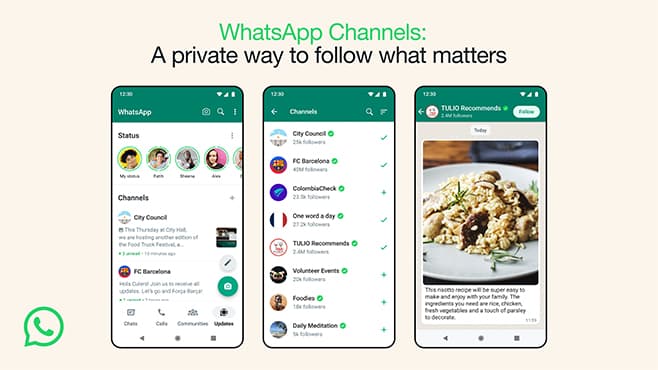
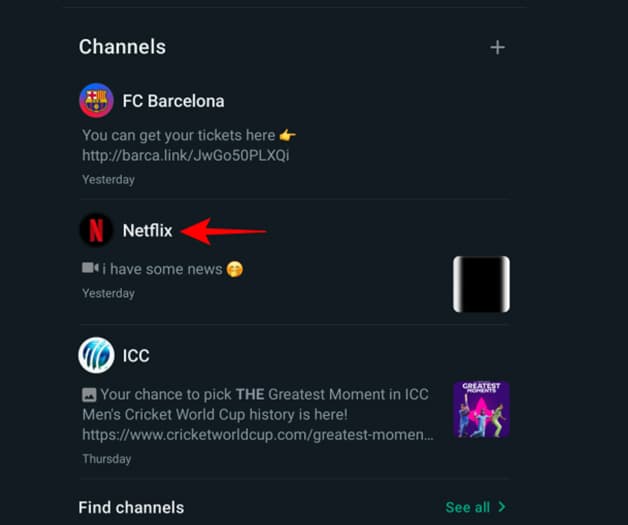
Channels is a one-way broadcast tool inside WhatsApp. Administrators publish content — including text, images, video, polls, and documents — and followers receive it in the Updates tab, a dedicated section Meta created that also houses Status updates.
The architecture is deliberately asymmetric. Followers cannot reply to channel posts. There is no group discussion. Admins cannot see who follows them, and followers remain anonymous to both the admin and each other. Channel history is stored for 30 days and then disappears from Meta's servers.
Understanding what this is not matters as much as understanding what it is. Channels is not a customer service tool. It is not a direct messaging environment. It is not a two-way relationship layer. Those functions belong to WhatsApp Business and the API ecosystem.
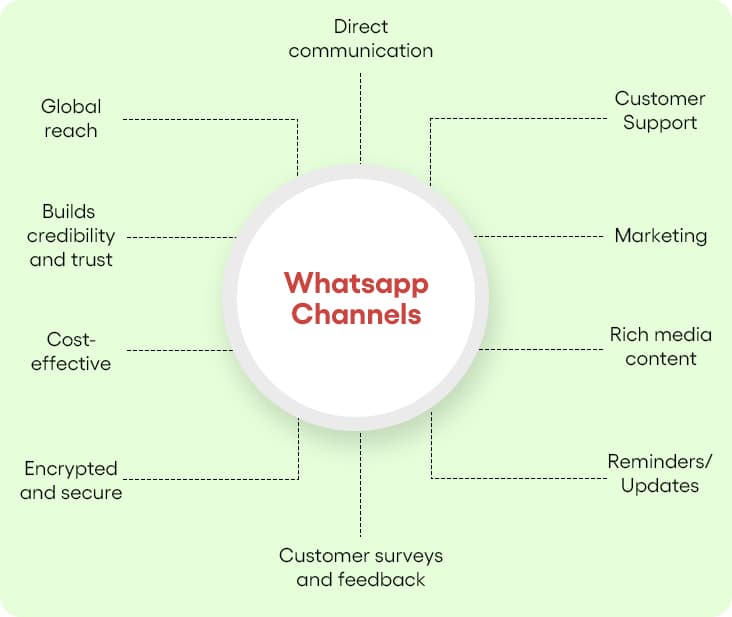
What Channels provides is a high-reach, low-friction content distribution mechanism inside an environment where people already spend significant daily time. That is a specific use case, and the brands getting value from it have defined that use case precisely rather than treating Channels as a general-purpose marketing tool.
The strategic question worth asking before investing in a Channels presence: What content do you have that your audience would genuinely choose to follow on a pull basis, given that they are opting in voluntarily and can unsubscribe with one tap?
WhatsApp Channels vs. WhatsApp Broadcast Lists: What Most Guides Don't Explain
This comparison is the most-searched question from brands evaluating WhatsApp marketing — and most guides skip it. Here is the clear distinction:
| Dimension | WhatsApp Channels | WhatsApp Broadcast Lists |
|---|---|---|
| Audience | Public — anyone on WhatsApp can follow | Private — only saved contacts |
| Follower visibility | Admin cannot see who follows | Admin has full contact list |
| Subscriber limit | Unlimited | 256 contacts per list |
| Replies | Not possible | Recipients reply as private chat |
| Data ownership | Meta owns subscriber list | You own the contact data |
| Discoverability | WhatsApp directory + external links | None — invitation only |
| Best for | Top-of-funnel awareness, content distribution | Direct outreach to existing customers |
The strategic implication: Channels and Broadcast Lists are not substitutes — they are different tools serving different stages of the customer relationship. Use Channels to reach and grow an audience you do not yet have contact details for. Use Broadcast Lists to nurture customers you have already captured. The brands that treat them as interchangeable are either over-investing in Channels (broadcasting to an audience they already own through cheaper means) or under-investing in Broadcast Lists (maintaining reach without data portability).
The Privacy Architecture and Why It Changes the Relationship Dynamic
WhatsApp Channels was built with a specific privacy posture that has direct implications for how businesses should use it.
Admins publishing to a channel do not expose their personal phone number or profile photo to followers. For businesses operating through a branded account, this is expected. For individual creators or consultants building a personal brand channel, it provides meaningful protection against unwanted direct contact.
On the follower side, subscriber anonymity is nearly complete. The admin cannot identify who is following, cannot message followers directly through the channel, and cannot export a contact list.

This is a fundamentally different data relationship than email, SMS, or even WhatsApp Broadcast Lists, where you own the subscriber data.
The commercial implication: WhatsApp Channels is not a list-building tool in any traditional sense. You are building reach inside Meta's environment, on Meta's terms, with no portability. Brands that have learned the expensive lesson of Facebook organic reach declining over time should factor this structural reality into how much they invest relative to owned channels.
Channels can function as an effective top-of-funnel awareness and engagement layer if the content strategy is designed to create deliberate pathways into owned environments: your website, your email list, your WhatsApp Business inbox. When structured this way, it becomes a genuine lead generation channel rather than a passive broadcasting tool. The channel itself is not the asset. The behavior it drives is.
The same Meta compliance considerations that apply to Facebook and Instagram advertising apply to WhatsApp Business. Brands building a WhatsApp presence should review the Facebook compliance guide — Meta policy violations across any platform can affect your broader Business Manager, including your WhatsApp Business assets.
Where the Commercial Value Is Legitimate
There are specific business contexts where WhatsApp Channels deliver measurable value. Being clear about these prevents the common mistake of deploying resources against a use case that does not match the tool's actual capability.
High-frequency content categories with genuine pull
The channels that accumulate large, engaged followings share a common characteristic: the content has inherent pull that does not require promotional framing. Sports scores and news, financial market updates, health and wellness tips, entertainment recommendations, flash sale alerts for brands with loyal customer bases — these categories work because the subscriber has a clear, recurring reason to stay subscribed beyond brand loyalty alone.
For most B2B companies and mid-market D2C brands, this is the hardest part of Channels to execute well. If your content calendar is primarily promotional, follower retention will be low. WhatsApp users are quicker to unsubscribe from irrelevant content than email subscribers, partly because the opt-out is one step and requires no confirmation.
Flash offers and time-sensitive inventory for established customer bases
For brands with an existing customer base that has already developed a relationship through other channels, Channels can be an effective vehicle for distributing time-limited offers. The 90%+ open rate environment means time-sensitive content has a meaningful advantage over email for immediacy.
The caveat: This only works if subscribers opt in with the expectation of receiving this type of content. Channels built around editorial content that then pivot to promotional broadcasting tend to see significant follower drop-off.
Community-adjacent content for creator-led businesses
If your brand has a strong individual voice — a founder, a practitioner, or a recognized expert — Channels is a reasonable place to distribute opinion-led content that builds affinity and drives downstream traffic. The content serves the audience first, and the commercial relationship follows from the affinity it creates.
For restaurants and food businesses specifically, WhatsApp Channels is one of the most underused touchpoints for driving direct orders and loyalty — the restaurant digital marketing guide covers how WhatsApp ordering fits into a broader direct channel strategy.
How to Grow Your WhatsApp Channel Subscriber Count
Most advice on WhatsApp Channels focuses on content strategy for retaining followers. The earlier challenge is acquiring them in the first place.
The most effective subscriber acquisition tactics for business channels:
Cross-promote from your existing owned channels first. Add your WhatsApp Channel link to your website homepage or footer, email signature, and Instagram and Facebook bios. If you already have a WhatsApp Broadcast List, message those contacts directly about your Channel with a specific reason to follow.
Be explicit about the content contract. When promoting your Channel, describe precisely what subscribers will receive: "Get weekly updates on new arrivals and first access to sales" is a content contract that attracts the right subscribers and sets accurate expectations. "Follow us on WhatsApp" attracts anyone and retains almost no one.
Use Instagram Stories and Reels with a Channel link sticker. Instagram's link sticker in Stories makes sharing your WhatsApp Channel URL frictionless. A Reel showing a teaser of your best Channel content — "Here's what we shared exclusively on WhatsApp this week" — drives the kind of opt-in that retains.
Optimize for WhatsApp's internal directory. WhatsApp surfaces Channels in a discovery directory organized by category, with a search function. Your Channel name and description are the primary inputs that determine how you surface in that directory. Treat the description with the same intent clarity you would apply to a search ad headline.
Practical Strategy: Building a Channel That Retains Followers
Most advice on WhatsApp Channels focuses on gaining followers. The more commercially important question is retaining them. A channel that accumulates 50,000 followers and then gradually loses them as content quality declines is a brand credibility problem, not just a reach problem.
Content frequency discipline
WhatsApp is a notification-heavy environment. Over-publishing is the fastest path to mass unsubscribes. Brands that publish multiple times daily without a strong reason tend to train their audience to mute or unfollow.
A publishing frequency that respects the user's attention should be defined before launch. For most brands, one to three updates per week is a sustainable cadence that can maintain quality. For news or sports entities with genuine daily content, higher frequency is appropriate and expected.
Define the content contract explicitly
When you promote your channel through your other marketing channels, be specific about what subscribers will receive. "Get weekly updates on new arrivals and early access to sales" is a content contract. "Follow us on WhatsApp" is not.
The specificity of the opt-in promise directly affects the quality of the subscriber base and long-term retention.
Build deliberate pathways to higher-value interactions
Since Channels does not allow direct responses, any conversion action requires the subscriber to take an additional step. Design your content to create clear, motivated next steps:
- a link to a landing page,
- an invitation to message your Business account for support,
- a link to a product launch.
Without these intentional pathways, Channels becomes a content publishing exercise with no measurable commercial output. Track the downstream traffic from Channels using UTM parameters on links. Without this, you have no way to measure whether the channel is contributing to revenue or simply distributing content into a black box.
Setting Up and Optimizing a WhatsApp Channel
The technical barrier to creating a WhatsApp Channel is low. The strategic barrier to making it commercially useful is considerably higher.
Discovery and search optimization
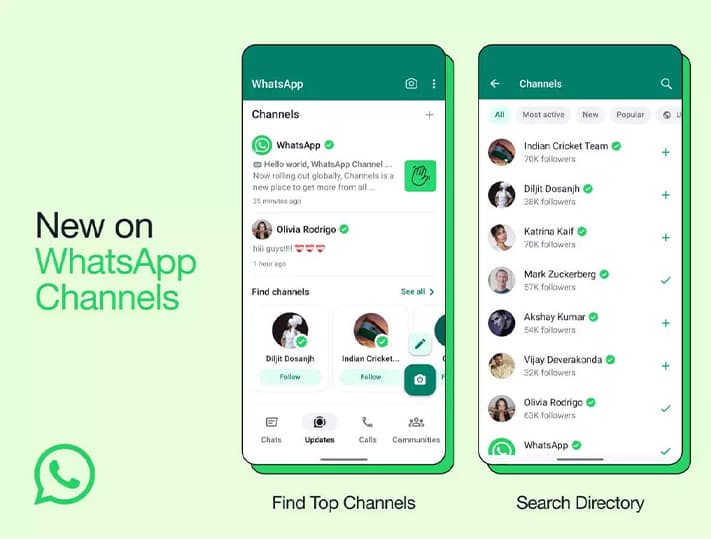
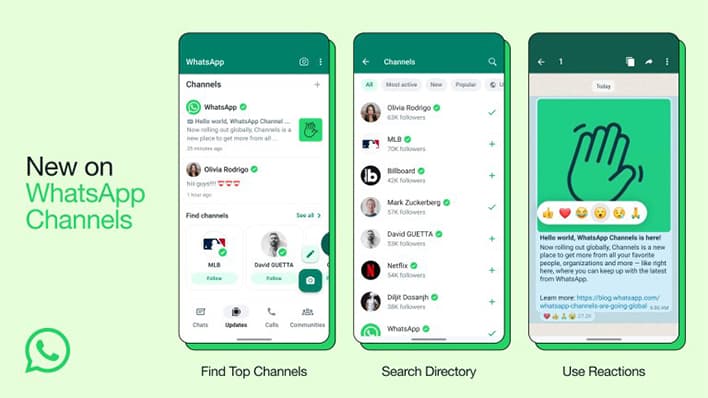
Channels are discoverable through WhatsApp's internal directory, which organizes channels by categories including "Popular," "Most Active," and "New." Your channel name and description are the primary inputs that determine how it surfaces in search within WhatsApp.
Treat the channel name and description with the same intent clarity you would apply to a Meta ad headline. Answer these questions in your description:
- What specific value does a follower receive?
- Who is this for?
- What type of content will they get?
Profile completeness and brand coherence
Your channel profile image, name, and description represent your brand in an environment where potential followers may encounter you without prior context. Ensure visual consistency with your other brand assets — an incomplete or inconsistent profile is a trust signal that works against you in a competitive discovery environment.
Reaction data as a feedback loop
Followers can react to channel posts using emoji reactions. This is the only native engagement signal available to channel admins, and it is underused as a content optimization input.
Track which content types and topics generate the highest reaction rates. This is directional data, not statistical significance — but over time, it reveals what your audience values enough to respond to versus what they consume passively.
Integrating Channels Into Your Broader WhatsApp Marketing Architecture
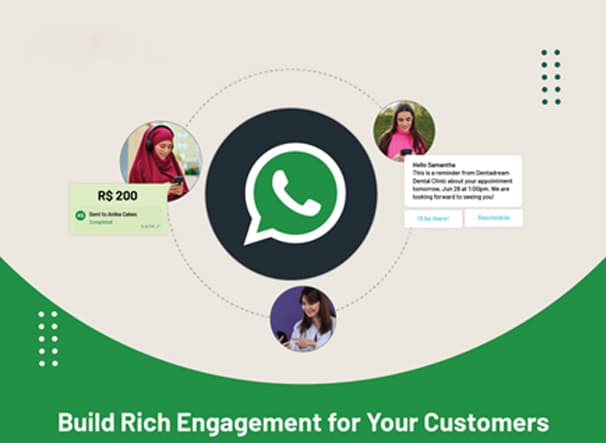
WhatsApp Channels exist in a larger ecosystem. The brands getting the most from it are not treating it as a standalone channel but as one layer in a broader WhatsApp marketing architecture.
The layered model worth considering:
Layer 1 — WhatsApp Channels: One-to-many broadcasts for awareness and content distribution. Generates attention from cold and warm audiences. Functioning as one component within a broader set of social media marketing services.
Layer 2 — WhatsApp Business: Inbound queries and direct customer interactions. Captures attention that Channels generates and converts it into conversations.
Layer 3 — WhatsApp Business API: Automated transactional communications, CRM-integrated retention flows, and high-volume operational messaging. Converts and retains customers at scale.
Channels is the lightest-touch, highest-reach layer. It is where cold-to-warm movement happens for audiences who have found you but not yet purchased. The API layer is where purchase-stage and post-purchase engagement happens.
A common mistake is investing heavily in Channels while underinvesting in the API infrastructure that captures and converts the intent Channels creates. The pipeline logic matters: Channels generates attention, Business captures it, API converts and retains it. Weakness in any layer limits the commercial output of the others.
Honest Assessment: What WhatsApp Channels Is Not Suited For
Part of building an effective strategy is knowing where not to invest. This context belongs earlier in your evaluation than the detailed strategy — before you have already committed resources.
WhatsApp Channels is not the right tool for:
- lead qualification,
- direct sales conversations,
- customer support,
- feedback collection at scale, or
- any interaction requiring two-way communication.
Brands that force these use cases through a one-way broadcast tool create friction and frustration for both their team and their audience.
It is also not a substitute for owned channel investment. Email lists, SMS programs, and direct website traffic give you data portability and audience ownership that WhatsApp Channels does not. The absence of follower data means you cannot take your Channels audience with you if Meta changes the product, restricts features, or alters the algorithm that surfaces channels in discovery.
For brands making strategic investment decisions about where to allocate marketing operations resources, the ordering should typically be: Owned channels first, then rented channels like WhatsApp Channels within a clearly defined role. Treating Channels as a primary CRM or retention layer is a structural risk that the platform's architecture does not support.
This connects to a broader demand generation principle — WhatsApp Channels sits naturally at the top-of-funnel awareness stage of the framework described in the demand generation vs. growth marketing guide on this site.
Frequently Asked Questions
What is the difference between WhatsApp Channels and WhatsApp Broadcast Lists?
WhatsApp Channels are public, one-to-many tools where anyone on WhatsApp can follow. Followers are anonymous to the admin and cannot reply. WhatsApp Broadcast Lists are private lists of saved contacts who receive messages as individual chats and can reply. Broadcast Lists require mutual contact saving, limiting reach to existing contacts. Channels enable audience growth beyond your contact list but sacrifice data portability and two-way interaction.
How do I grow my WhatsApp Channel subscriber count organically?
Add your Channel link to your website, email signature, and social media bios. Mention your Channel in existing WhatsApp Broadcast Lists and Business inbox messages. Create a landing page explaining what subscribers receive. Promote in Instagram Stories with a Channel link sticker. Optimize your Channel name and description with specific terms matching what your audience searches for within WhatsApp's discovery directory.
Can I use WhatsApp Channels for customer support or lead qualification?
No. Channels are one-way broadcasts — followers cannot reply to posts. Customer support and lead qualification require two-way communication, which belongs in WhatsApp Business (for direct messaging) or the WhatsApp Business API (for automated conversation flows). Use Channels to broadcast content and drive followers toward your Business inbox or website for conversion interactions.
How do I measure the ROI of a WhatsApp Channel for my business?
Add UTM parameters to every link shared in Channel posts, then track downstream traffic and conversions in GA4. The metrics worth building tracking infrastructure around are: click-through rate on post links, downstream conversion from Channel-attributed traffic, and inbound Business messages attributable to Channel content. Follower count is a vanity metric — a channel with 5,000 engaged followers clicking through to commercial content is more valuable than 50,000 passive followers.
Does WhatsApp share Channel subscriber data with the admin?
No. WhatsApp Channels is designed with near-complete subscriber anonymity. Admins cannot see who follows their Channel, cannot export subscriber data, and cannot message followers directly through the Channel. The only engagement data available to admins is aggregate reaction counts and view counts per post. This is a fundamental architectural difference from email lists or Broadcast Lists — treat Channels as borrowed reach, not owned data.
KPIs Worth Tracking, and the Ones That Are Not
Because Channels offers limited native analytics, defining the right success metrics requires deliberate planning.
Follower growth rate tells you about discovery and attraction effectiveness. Reaction rate per post tells you about content resonance. But neither of these is a commercial metric.
The metrics worth building tracking infrastructure around are:
- click-through rate on links within posts (requires UTM tagging),
- downstream conversion from Channel-attributed traffic (requires analytics integration), and
- the volume of inbound messages attributable to Channel content.
Follower count as a primary KPI is a vanity metric. A channel with 5,000 highly engaged followers from a relevant buyer segment consistently clicking through to commercial content is more valuable than a channel with 50,000 passive followers who rarely interact.
WhatsApp Channels Is a Legitimate Layer, Not a Core Strategy
WhatsApp Channels is a legitimate marketing layer for Indian brands with the right content type and a clear conversion architecture. The brands that will get the most from it are the ones who define their content contract precisely, build the downstream pathways that connect Channel content to revenue, and measure what actually matters — not just follower growth.
Set your measurement framework before you launch. It is significantly harder to retrofit attribution logic after you have been publishing for six months without tracking. And keep Channels in its proper role: one layer in a broader marketing architecture, not a substitute for the owned channels and CRM infrastructure that your business's long-term growth depends on.
Not sure if WhatsApp Channels is the right fit for your business, or how to set up the three-layer architecture described above? We build WhatsApp marketing strategies for Indian brands across the full stack — Channels, Business, and API. Get a Free WhatsApp Strategy Consultation

Aditya Kathotia
Founder & CEO
CEO of Nico Digital and founder of Digital Polo, Aditya Kathotia is a trailblazer in digital marketing. He's powered 500+ brands through transformative strategies, enabling clients worldwide to grow revenue exponentially. Aditya's work has been featured on Entrepreneur, Economic Times, Hubspot, Business.com, Clutch, and more. Join Aditya Kathotia's orbit on LinkedIn to gain exclusive access to his treasure trove of niche-specific marketing secrets and insights.