

The assumption most underfunded marketing teams make about SEO is that budget is the primary variable. Spend more, rank higher. It is a logical inference — wrong, but logical.
Budget matters in SEO, but it is not the governing variable. Domain authority, topical coverage, and content depth are the governing variables. And while established brands have advantages in all three, none of those advantages are insurmountable — they are just slow to close.
The businesses that close them do it through strategic focus rather than volume. This involves finding the specific terrain where their larger competitors are structurally weak and building there first.
This is not a theoretical argument. It is the mechanism by which smaller brands consistently take meaningful organic market share from companies with multiples of their marketing budget. Understanding that mechanism clearly is more useful than a checklist of SEO tactics.
Why Larger Brands Have the Advantage They Have
Before identifying where large brands are vulnerable, it is worth being precise about where their advantages actually come from. The common explanations — "they have more budget" and "they have brand recognition" — are true but not operationally useful. If you are already a market leader defending that position, enterprise SEO strategies work differently — the priority shifts from closing authority gaps to widening them.

The more precise picture:
Domain authority compounds with time.
A domain that has been earning quality backlinks for ten years has built an authority signal that is genuinely difficult to replicate quickly. Google's trust in established domains is partly a function of the link profile they have accumulated and partly a function of demonstrated reliability over time.
A newer or lower-authority domain is not disqualified from ranking in competitive categories, but it starts at a structural disadvantage that takes consistent effort to close.
Content coverage breadth creates topical authority.
Large brands with significant content operations have often published across hundreds or thousands of related topics, creating a network of interlinking content that signals deep expertise to search engines.
This topical authority earns ranking authority across related queries, not just the specific keywords they target directly.
Brand search volume is itself a ranking signal.
When users search for a brand by name and click through to the site, those brand searches signal to Google that the domain is a destination people actively seek. Large brands with high brand recognition generate this signal continuously, which reinforces the authority gap.
Speed of response to opportunities.
Large marketing teams can respond quickly to trending topics, algorithm changes, and emerging keywords. Their production capacity allows them to publish comprehensive content on new opportunities before smaller teams can.
Understanding these advantages matters because knowing where the structural weaknesses are requires understanding why the strengths exist.
Where Large Brands Are Actually Vulnerable
The advantages above are real. What is less appreciated is where they create corresponding blind spots.
Organizational inertia creates content gaps.
Large brands with established content calendars and approval processes move slowly. A trending topic that emerges on a Monday may not have content live until Thursday or Friday, if the brand covers it at all.
More structurally, large brands tend to optimize for their highest-volume keyword targets and underinvest in the long-tail and mid-funnel queries where smaller competitors can build meaningful positions.
Breadth trades off against depth.
A brand covering 500 topics at medium depth is vulnerable to a competitor covering 50 of those topics with significantly greater depth and specificity.
Google's Helpful Content updates have consistently moved in the direction of rewarding genuine depth and specificity over broad surface-level coverage. This is terrain where focused, smaller brands can genuinely outperform.
Local and niche authority is harder to fake at scale.
A national or global brand struggles to establish genuine local relevance. A regionally focused competitor with deep local knowledge, local backlinks, and content built around specific geographic and community context can outrank brands with vastly superior overall authority in local search contexts.
This is one of the clearest examples of where local SEO for small businesses creates a structural advantage that budget alone cannot overcome.
High-domain-authority brands do not always earn the most relevant links.
Link authority and topical relevance are different things. A smaller brand that produces genuinely original research, distinctive data, or highly specific expertise in a niche can earn links from more relevant sources than a large brand whose content is more generic. Relevant links from topically aligned sources carry more weight than their volume might suggest.
Featured snippet opportunities are democratized.
Position zero — the answer box at the top of search results — is achievable for specific, well-structured queries regardless of domain authority. Large brands do not automatically occupy these positions, and they often leave them uncontested in long-tail and question-based query spaces.
How to win featured snippets against larger competitors: Identify question-format queries where your competitors rank in positions 2–5 but do not have a clean, direct answer. Write a 40–60 word direct answer to that question as an H2 or H3 sub-section. Support it with a brief numbered or bulleted list if applicable. This structured formatting is how Google identifies content suitable for featuring — and it is completely independent of your domain authority.
The Strategic Framework: Three Tiers for Competing Where You Can Win
The strategic error that most smaller brands make in competitive SEO is trying to compete directly on the terms where larger brands are strongest — high-volume, transactional head keywords in the core category. This is the most expensive, slowest, and least differentiated approach available.
The strategic framework that actually works is tiered:
| Tier | Strategy | Time Horizon | Difficulty |
|---|---|---|---|
| Tier 1 | Build topical authority in a defensible niche | 3–12 months | Low-medium |
| Tier 2 | Target mid-funnel and long-tail queries where competition thins | 6–18 months | Medium |
| Tier 3 | Use earned authority to challenge broader terms | 12–24 months | High |
Tier 1: Build topical authority in a defensible niche.
Choose the specific subject area where your product or service has genuine depth and where the larger competitor's coverage is relatively thin. Build comprehensive, deeply researched content in that area. This is the core of what effective SEO for small businesses looks like in practice — focused, deep coverage in a specific niche rather than trying to match a large brand across every category.
This is not just one piece, but a cluster of interconnected content that demonstrates breadth of knowledge within the niche. This is topical authority building, and it earns ranking authority that extends to adjacent queries over time.
Tier 2: Target mid-funnel and long-tail queries where competition thins.
A small printer manufacturer cannot realistically rank for "buy printers online" against HP and Canon. But "top wireless printers for small law firms" or "best printers for home-based photographers under $300" represent mid-funnel queries with meaningful commercial intent, lower competitive density, and a specific audience whose needs the smaller brand may be better positioned to address.
Win there first. The long-tail matters more than most brands realize. A cluster of 20 well-targeted long-tail articles that each earn a page-one position generates more total qualified traffic, at lower CAC, than a single attempt to rank for a head term against entrenched competition.
Tier 3: Use earned authority to challenge broader terms over time.
As topical authority in the niche builds and mid-funnel content earns traffic, links, and engagement signals, the domain accumulates the authority needed to compete for broader terms.
This is a 12 to 24-month horizon, not a 90-day play — but it is directionally sound, and it is how brands consistently close the authority gap with better-resourced competitors.
Executing the Strategy: Where to Invest First
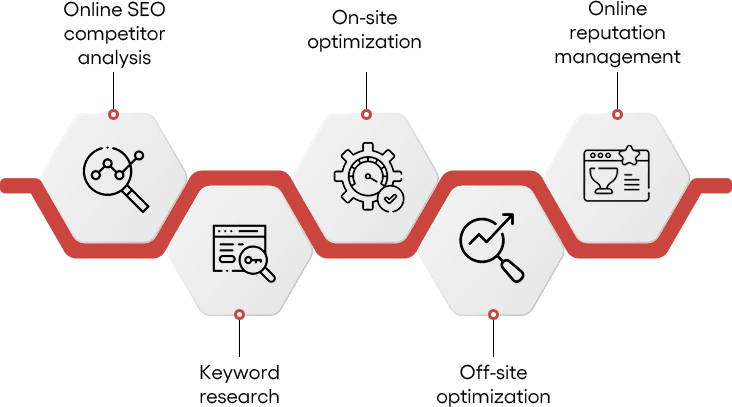
Competitive Intelligence Before Creative Output
Before producing any content, invest in understanding the specific terrain. A thorough competitive analysis is not optional — it is the prerequisite for making good strategic choices about where to compete.
At the macro level, this means understanding:
- which keywords your competitors are ranking for and which they are not,
- where their content is strongest and where it thins out,
- what their backlink profile looks like and where the gaps are, and
- how their site structure organizes content authority.
Tools like Ahrefs, SEMrush, and Screaming Frog make this analysis tractable.
At the micro level, it means reading the content itself:
- What questions does the competitor's ranking content fail to answer?
- Where does it lack specificity or depth?
- What user needs does it underserve?
The gap between what ranks and what the user actually needs is where your content opportunity lives. The objective is not to replicate what competitors are doing. It is to identify where they are not doing it well enough and build something that genuinely serves the user better.
Keyword Strategy Built Around the Buyer Journey, Not Volume
The fundamental error in keyword strategy for smaller brands is prioritizing by search volume. Volume should be one input, not the primary filter. The more useful primary filter is the intersection of commercial intent, competitive difficulty, and your realistic probability of ranking within six to twelve months, given your current domain authority.
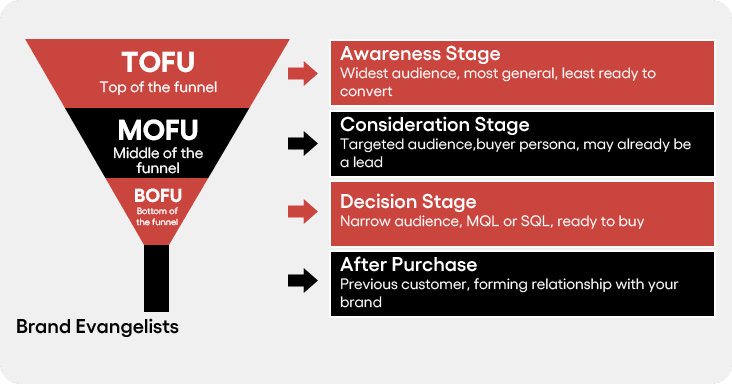
A keyword map structured around the buyer journey produces better strategic decisions than a list sorted by volume.
- At the top of the funnel, informational queries capture people who are beginning to research a category — this is where you build audience and brand familiarity.
- In the middle of the funnel, commercial comparison queries capture people actively evaluating options — this is where you win consideration.
- At the bottom of the funnel, transactional queries capture people ready to purchase — this is where domain authority matters most and where smaller brands should invest later rather than first.
For a more detailed framework on keyword selection and intent mapping, the ecommerce keyword strategy guide covers the specific mechanics of assigning keywords to page types and measuring performance.

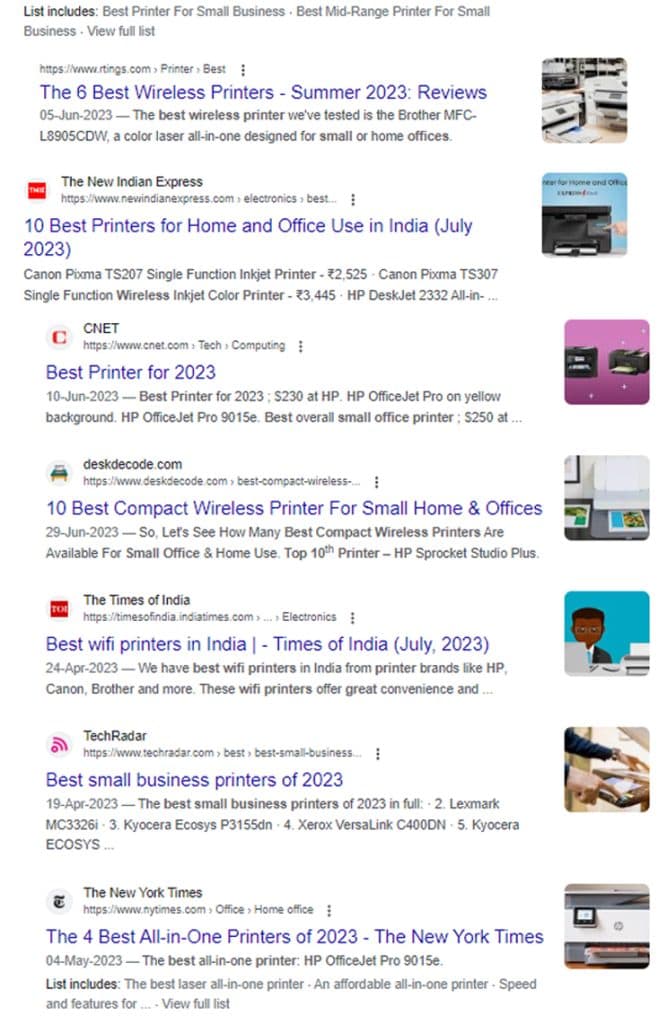
Content Quality as Competitive Differentiation
In saturated categories, content quality is the differentiator that determines whether investment compounds or stagnates. The specific dimensions of quality that move rankings and earn sustained traffic:
- comprehensiveness relative to the query (does the content actually answer what the user is asking, fully?),
- specificity and depth (does it contain information not easily found elsewhere?), and
- evidence of genuine expertise (does the author or organization have credible knowledge of the subject?).
Pillar content is a comprehensive resource that covers a topic with sufficient depth to serve as the definitive reference. It earns backlinks, supports cluster content, and signals topical authority.
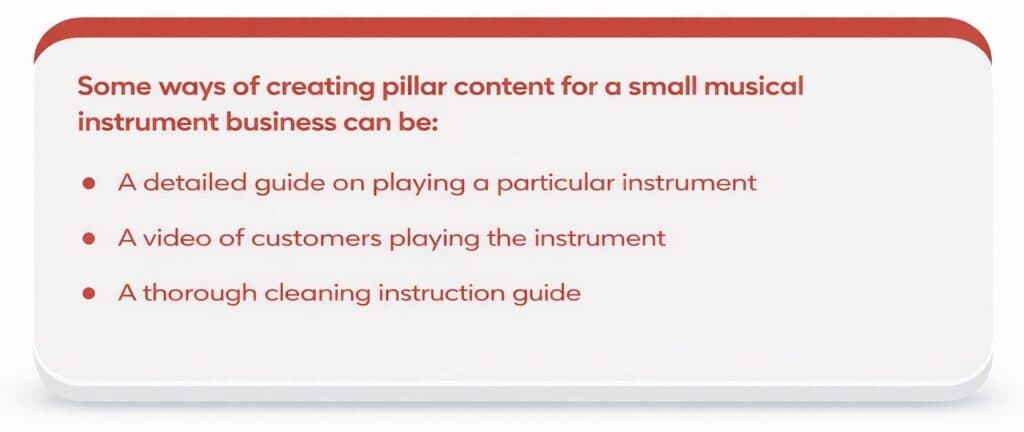
For a business trying to compete with a larger brand, investing in two or three genuinely comprehensive pillar pieces in your specific niche is a higher-leverage investment than producing ten thin blog posts targeting broad keywords.
Creative campaigns that generate earned media and backlinks can accelerate the authority-building process in a way that content production alone cannot. A campaign that earns 700 press mentions produces backlinks from diverse, authoritative sources at a scale that would take years to build through outreach alone. For smaller brands, creative campaigns that earn genuine media attention are among the fastest available paths to meaningful authority gains.
Technical Foundation: The Table Stakes Issue
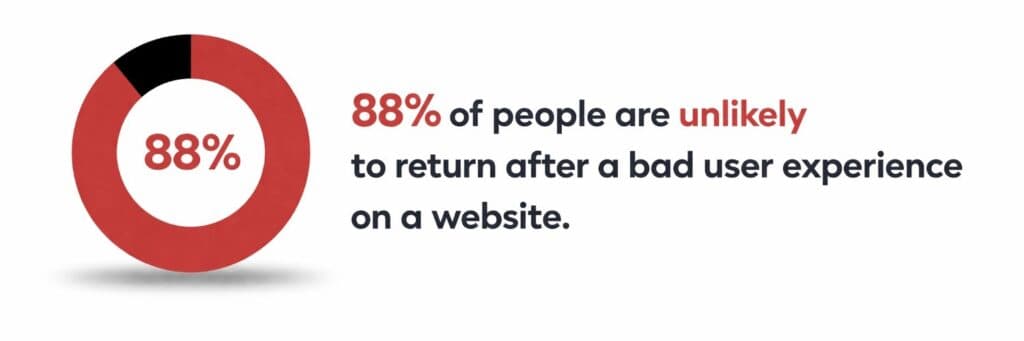
Technical SEO is not a differentiator for smaller brands — it is a floor requirement. A site with crawlability issues, poor Core Web Vitals scores, thin or duplicate content, or an inconsistent internal linking structure is limiting the return on every other SEO investment. Fix the technical foundation before scaling content production.
The specific technical priorities worth addressing early:
- ensure all important pages are indexable and actually indexed in Search Console,
- resolve any crawl budget issues that are preventing efficient discovery of new content,
- optimize Core Web Vitals scores, particularly on mobile (where the majority of searches now originate),
- implement clean internal linking that distributes page authority to priority content, and
- establish a schema markup framework that helps search engines accurately interpret content type and context.
A technical SEO audit is worth doing once before ramping up content production and revisiting annually or after major site changes.
Off-Page Authority Building: Quality Over Volume
Backlink acquisition is where smaller brands most frequently make costly mistakes. The temptation to accelerate authority building through scaled link acquisition — purchased links, private blog networks, low-quality directory submissions — is understandable given the time required to build authority organically.
The risk-adjusted math argues consistently against it. Google's ability to identify and discount or penalize manipulative link patterns has improved substantially. The penalty for a manual action on a smaller site can be existential. If shortcuts are tempting, read what Google penalty recovery actually involves — the cost in time, revenue, and credibility is consistently higher than the acceleration those shortcuts provided.
What works:
- creating content that earns links because it is genuinely useful or interesting (original research, comprehensive guides, distinctive data);
- guest contributions to authoritative publications in your category;
- digital PR campaigns that generate earned media; and
- targeted outreach to topically relevant sites proposing content that serves their audience.
One of the most budget-accessible link acquisition tactics for smaller brands is broken link building — finding competitor dead pages and offering your content as a replacement. The broken link building case study on this site shows exactly how this generates both backlinks and direct leads simultaneously.
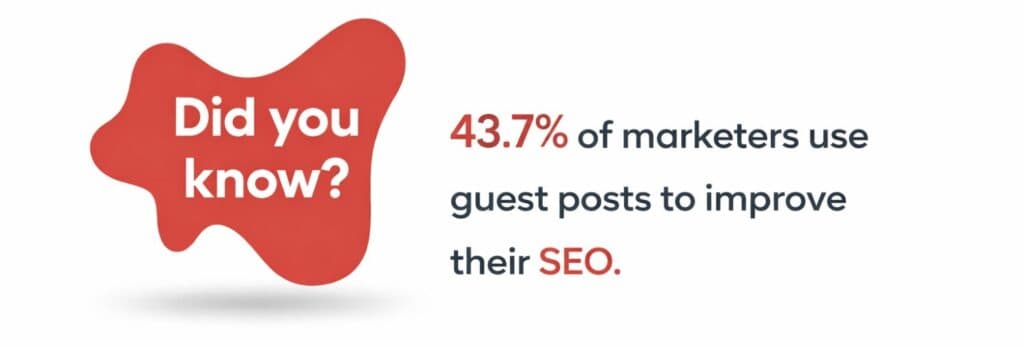
Local link acquisition deserves specific attention for businesses with geographic relevance. Links from local news publications, local business associations, regional directories with genuine editorial standards, and community organizations carry real authority weight and are typically less competitive to earn than national-level links.
Online Reputation as a Ranking and Conversion Factor
Review signals are a legitimate ranking factor in local and product-category searches, and they have a direct impact on click-through rates that compound their ranking influence. A business with a 4.7-star rating on Google generates meaningfully more clicks on the same ranking position than a business with a 3.9-star rating — and those engagement signals feed back into rankings.
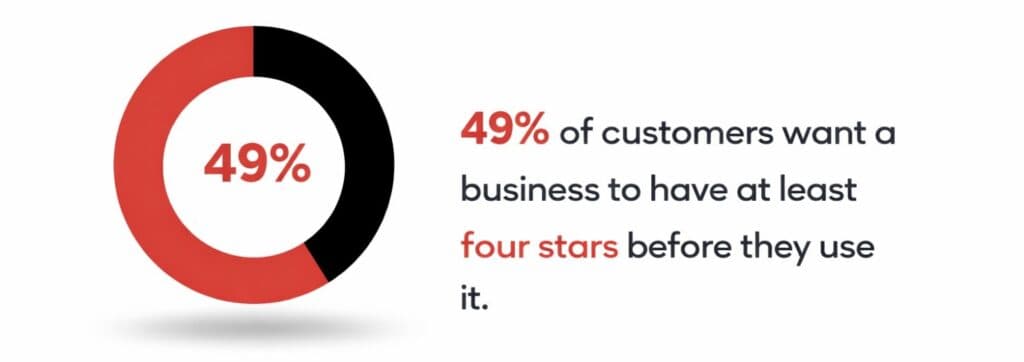
Building a proactive review acquisition process is not optional if reviews are a category consideration for your buyers.
The mechanism is straightforward:
- identify the post-purchase moment where customer satisfaction is highest,
- build a request into your operational process at that moment, and
- make the review process as frictionless as possible.
Responding to all reviews, including negative ones, promptly and constructively signals responsiveness that reinforces trust. The defensive dimension matters equally — monitoring brand mentions across review platforms, social media, and forums allows early identification of reputation issues before they compound.
Frequently Asked Questions
What free tools can a small business use to find SEO keyword gaps against competitors?
Google Search Console shows which queries your site already gets impressions for — a starting point for finding where you are close to ranking. Google Autocomplete and "People Also Ask" surfaces real search patterns at no cost. Ahrefs and Semrush both offer free tiers with limited daily queries that can surface competitor keyword gaps. For local businesses, the Google Business Profile Performance tab often provides the most immediately actionable free data.
How do I build backlinks without a big budget or PR team?
The most budget-accessible tactics are: broken link building (finding competitor dead pages and offering your content as a replacement), original research that journalists and bloggers cite naturally, guest contributions to relevant industry publications, and local link acquisition from regional directories and associations. None of these require a PR budget — they require time and a content asset worth linking to.
How long does it take for a small brand to rank on the first page in India?
In low-competition local niches, 3–6 months of consistent work can produce page-one positions. In mid-competition categories, expect 6–12 months before meaningful first-page positions emerge. In high-competition national categories, the realistic timeframe is 12–24 months before challenging established brands. The compounding nature of SEO means the second 12 months typically produces significantly more results than the first.
What is a featured snippet and how can a small brand win one from a bigger competitor?
A featured snippet is the answer box at the top of Google results. Google selects it based on which page answers the question most clearly, regardless of domain authority. To win one: identify question-format queries where competitors rank in positions 2–5 without a clean direct answer. Write a 40–60 word direct answer as an H2 or H3 heading in your content, supported by a brief numbered or bulleted list. This is one of the clearest cases where smaller brands can outperform larger ones through content quality rather than authority.
Should a small brand invest in local SEO or national SEO first?
Local SEO first, for businesses with physical presence or a defined geographic service area. Local results are governed more by proximity, review signals, and GBP completeness than by domain authority — giving smaller brands a structural advantage. Win the local search landscape first, then build national authority from that foundation.
The Time Horizon and the Compounding Logic
Competitive SEO against well-funded incumbents operates on a longer time horizon than paid media, and the results are non-linear.
- The first six months are predominantly investment with limited visible return — technical improvements, initial content production, and early link acquisition.
- Months six through twelve typically show meaningful movement on long-tail and mid-funnel terms.
- Months twelve through twenty-four are where broader keyword positions become realistic and where the compounding nature of organic authority becomes visible in traffic and acquisition data.
The businesses that fail at this strategy typically do so in one of two ways: they expect paid media timelines and reduce investment before the compounding begins, or they invest in the wrong tier — attempting to compete on head terms before building the authority foundation that makes those positions achievable.
The gap between a smaller brand and a well-funded competitor is not budget — it is strategic focus and time. The brands that close the gap do it by building genuine depth in a specific niche before attempting to compete on breadth. Start where your competitor is weakest, not where they are strongest. The organic traffic and brand authority built through this approach compound over time, continuously reducing CAC as the channel matures — and the competitive position established on genuine topical authority is significantly harder for well-funded competitors to dislodge than a position held primarily through paid media spend.
Want to know where your biggest keyword gap opportunities are relative to your specific competitors? We can run that analysis and tell you exactly where to build first. No obligation — just a clear picture of where you stand. Request a free competitive SEO analysis →

Aditya Kathotia
Founder & CEO
CEO of Nico Digital and founder of Digital Polo, Aditya Kathotia is a trailblazer in digital marketing. He's powered 500+ brands through transformative strategies, enabling clients worldwide to grow revenue exponentially. Aditya's work has been featured on Entrepreneur, Economic Times, Hubspot, Business.com, Clutch, and more. Join Aditya Kathotia's orbit on LinkedIn to gain exclusive access to his treasure trove of niche-specific marketing secrets and insights.